 SVR S&T Dept.

SIGNALLING NOTES - Chris. Hall
Although the railway was shut to passenger traffic from January to early April, there was still plenty for us to do. The Bewdley South Down Inner Homes bracket signal was sitting in the car park on some large stands with its back face on top so that we could, eventually, assemble the timberwork for the platforms. On 28 January the last coat of paint was applied to the new signal post and on 30 January we removed the poly tunnel by gathering a few willing volunteers and lifting it bodily over the signal post out of the way.
We checked that the studs would fit through the holes, which were now a little full of paint. Given that the holes were drilled from each side and only just met, there was a hour or two of careful further drilling! The rear half of the bracket steelwork (which sits on top of the post) was lifted onto a couple of wooden packing pieces and carefully manoeuvred into about the right place. After a break for lunch in Bewdley buffet, with gravity on our side, we were able to engage the spigot into its hole and there was only a gap of about 10mm. A little wriggling and the steelwork dropped to rest on the post. The painstaking work over the last few months to drill holes in the right place now paid off.
By careful lifting and packing, one end at a time, we got the lower half positioned and were able to lever it up and onto two ¾• studs that we tapped into place from above. The two bracket halves were then pulled into place and the remaining studs fitted and tightened.
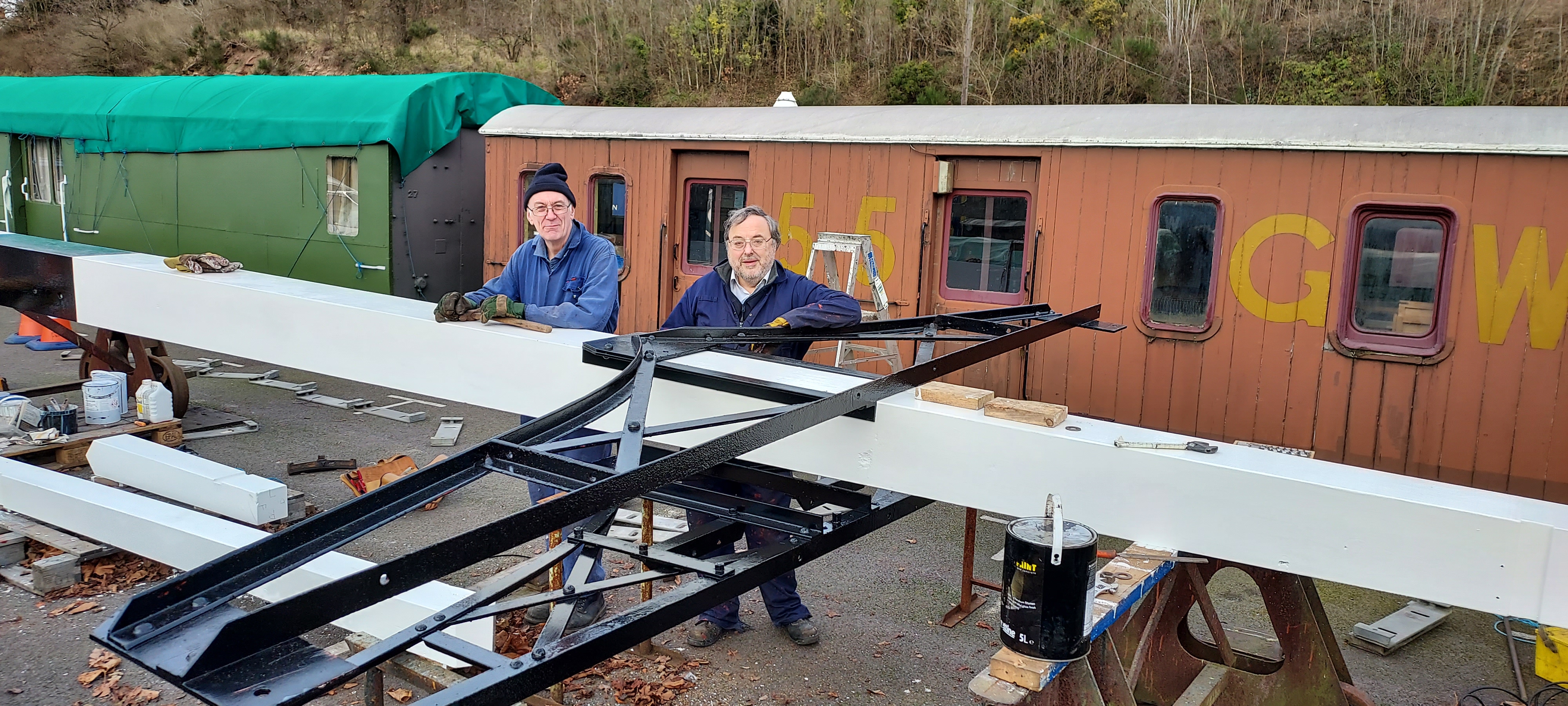 By 1400 on 30 January we are able to admire the steelwork sitting in the correct position on the post. The front half of the steelwork is sitting beneath the post ready to be lifted into position - this time with gravity not on our side! Photo: P. Marshall.
Over the next month and a half we marked out and fitted the two dolls, the backstops, spindle castings, balance lever castings and down rods. Pretty much everything apart from the main ladder and the signal motor for the Distant had now been fitted. Some items were removed to allow the lift to take place - two timber planks and handrails were removed - and a revised lifting arrangement with a block fitted to stand the crane hook to one side.
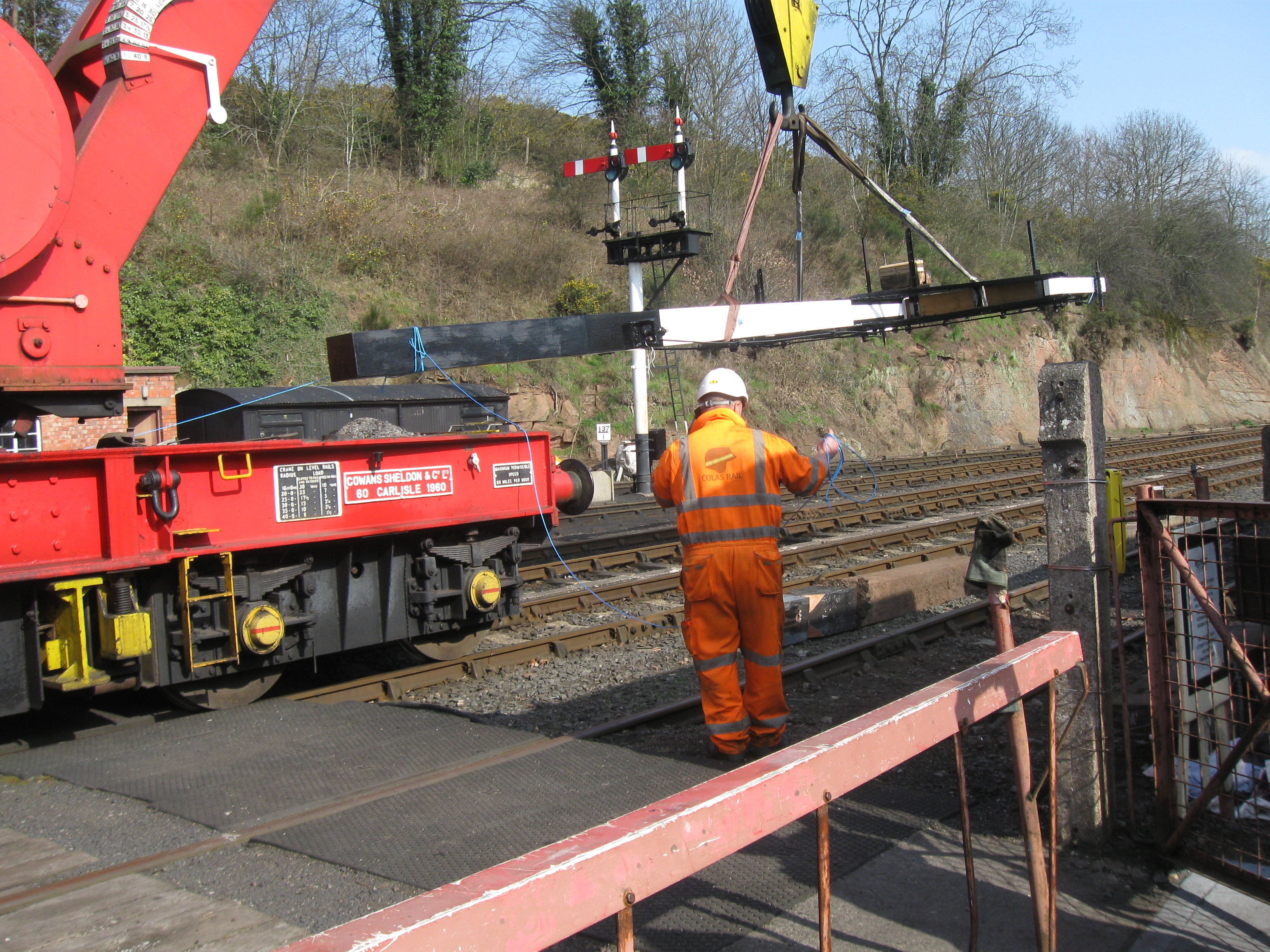 We have not quite finished drilling the holes for the Distant signal motor but time has run out! We will have to do that using the millionaire‘s ladder (otherwise known as the MEWP, Mobile Elevated Working Platform). The signal was lifted into place on 23 March. Photo: C. K. Hall.
The hole had been dug out the previous day after the stump of the previous signal had been removed. During manoeuvring of the signal, some debris had got into the hole. While the signal hung from the crane, the digging party was called back to clear the debris and at the second attempt the signal lowered to the correct depth. For reasons which I cannot explain, a small spade was presented to me in Bridgnorth bar the following weekend.
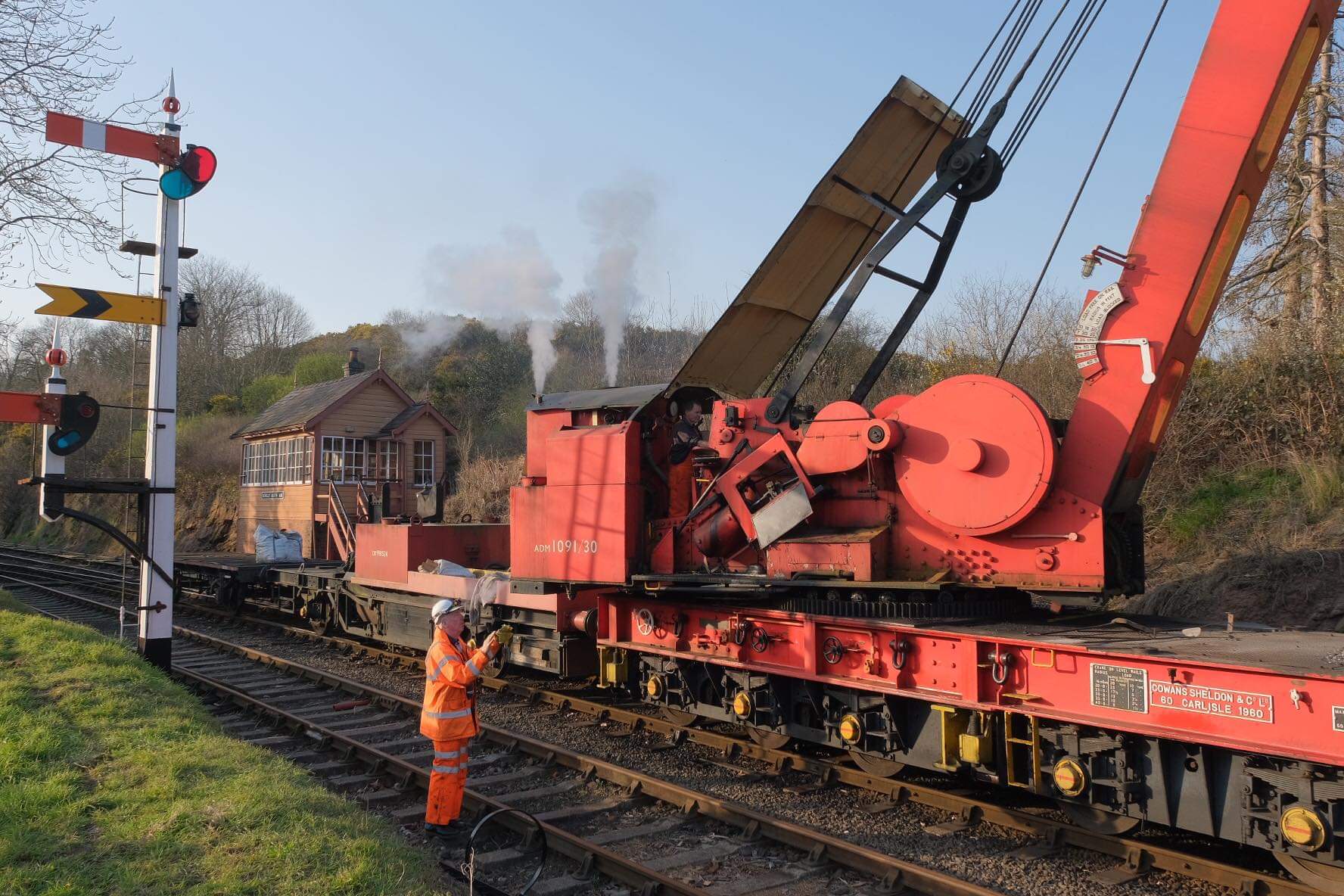
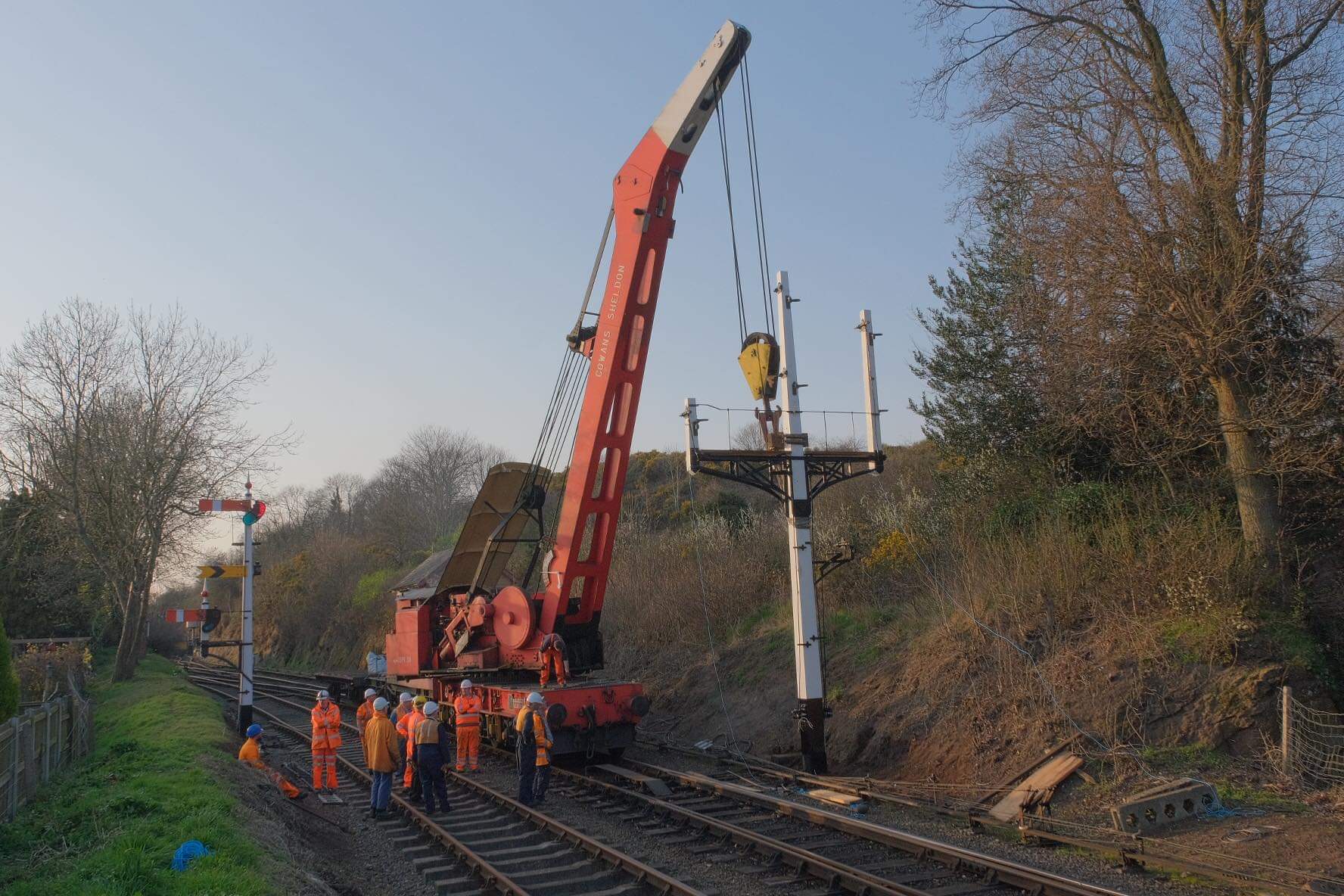 Above: Fred is in control of the lift and the signal is lowered into place but does not sit low enough as some debris has fallen into the hole. It is lifted out and the debris removed. The second time it sits at the right height and is eased into the correct position with the attached ropes. Photos: Rob Green.
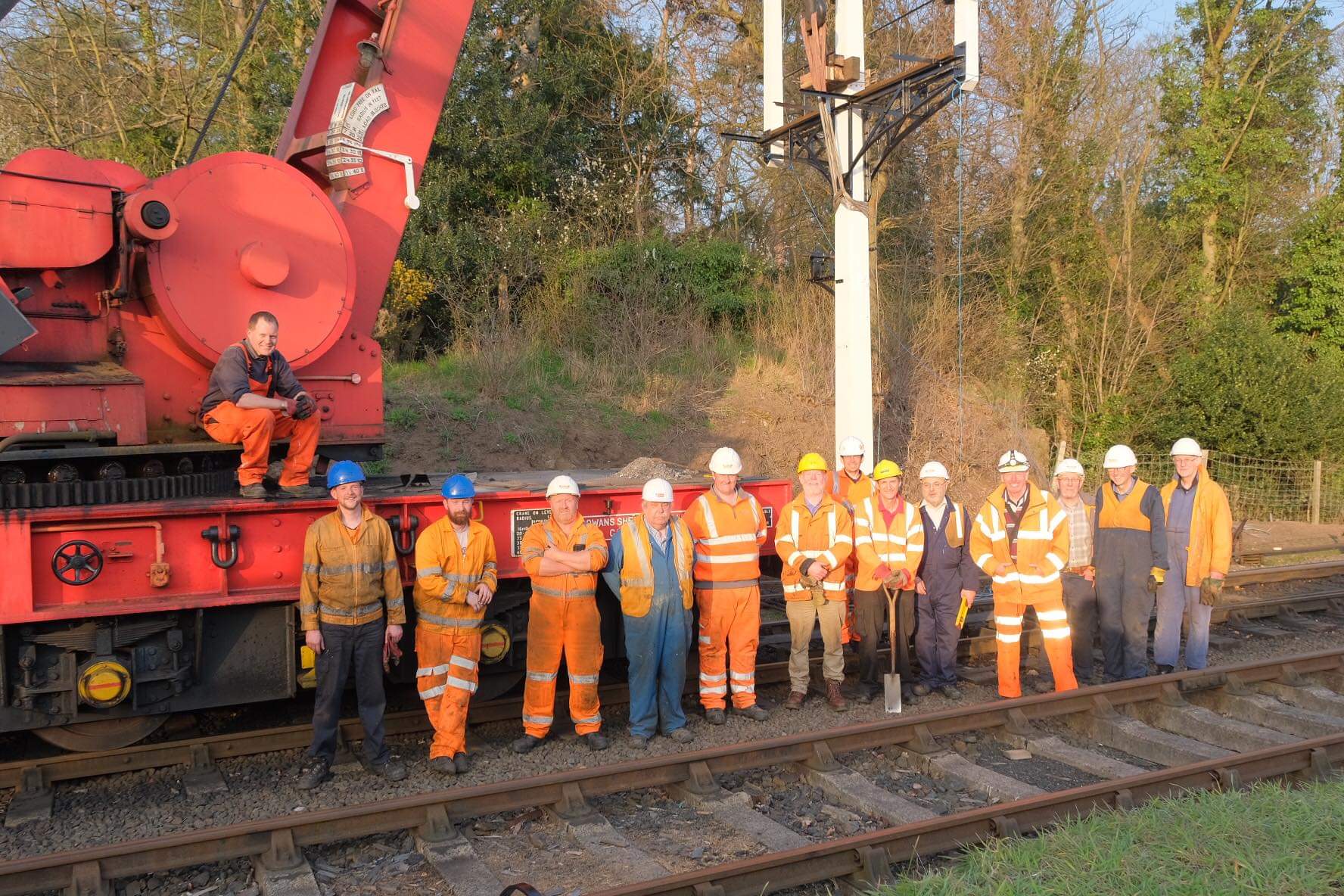 Right: The signal is vertical and the working party poses for a photograph, very satisifed with the day‘s work. Photo: Rob Green.
The month after the signal was planted has been occupied by refitting and adjusting the remaining components but the signal was operational for the start of services albeit with the Distant signal fixed at caution and no lamps.
Our mid week maintenance gang has continued with routine testing, adjusting and renewals throughout the Winter and made sure that all the necessary work has been completed (just) in time for resumption of services. The running disc signal at the points for Engine Line 1 (no. 35) at Kidderminster was removed for the crane to lift out the footbridge on 12 February and has been reinstated until they return with the new bridge at the end of May.
Meanwhile the electrical section has been busy preparing a replacement location cupboard for the motor points (no. 14) by the Carriage Shed. This will include, inter alia, a larger cable termination for the extra cores required in a new cable to the section signal. The cupboard has been installed and commissioned and an overhauld point machine is ready for when the switches here are renewed.
One theme that is beginning to recur is cable degradation - several cables have been disturbed for various pieces of work in the past ten or twenty years and cables that were installed over 40 years ago do not take kindly to this. The cable from Bewdley South box to the Up Starting signal was therefore added to the list of cables measured up for replacement when funds allow. Firing an electrical pulse into the cable initially suggested that one of the faults was where the hole was dug out for the bracket signal to be planted but the location of the fault is now thought to be further away.
During the gala, one of the visiting engines knocked a couple of 3-way signal wire pulleys off the wall of platform 1 at Bewdley (something that is not uncommon at this location) and this was spotted on the Sunday. The pulley supports were refitted between trains the same day with the cooperation of the signalman. The pulleys for signals 20, 25 and 27 (Down Main Backing and the two Yard exit signals, not frequently used) were left off and the signals taken out of use until the visiting engines have gone! In the longer term we‘ll replace some of the pairs of 3-way pulleys with three 2-way pulleys in critical places here.
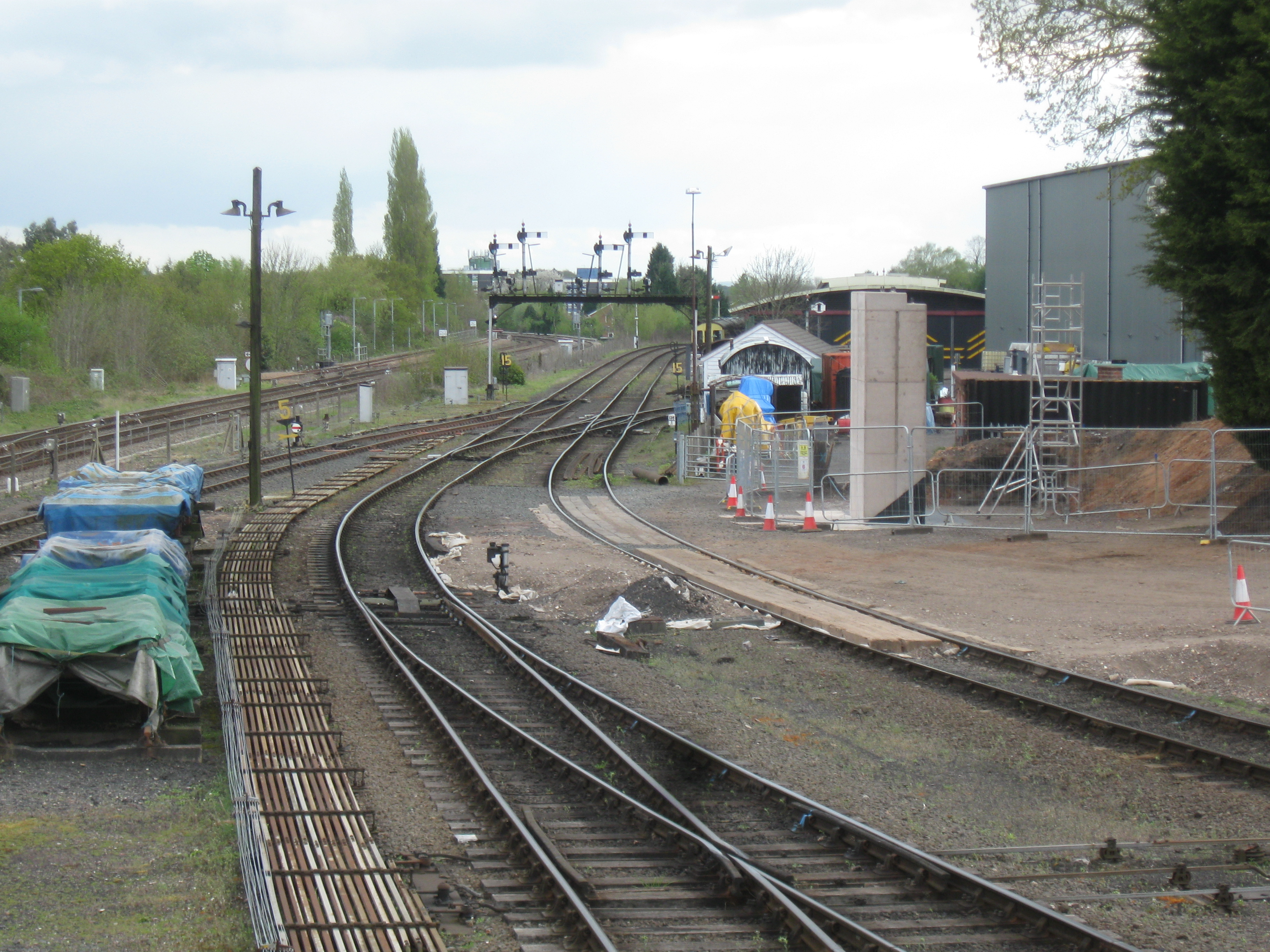 A view from the signal box window on Easter Monday 18th April showing the new rather slender bridge abutment. The roadway will go to the left of this abutment - a missed opportunity to place a rail and road access to the Yard clear of the railway lines. Photo: C. K. Hall.
A reminder that this article, as well as other information on Signal Engineering, can be viewed in full colour here on the unofficial Signal Engineering web site.