 SVR S&T Dept.

SIGNALLING NOTES - Chris. Hall
November and January are always busy months for signal engineering because we turn our attention to the bigger jobs that require a line blockage. Between 24th and 26th October we were using the 30 ton crane to lift out the Down Starting signal at Highley - the concrete post had deteriorated exposing some reinforcing bars to corrosion. We used the Up Starting signal to replace it and installed a new wooden post signal in its place. The MEWP provided convenient access for fitting the signal arm and adjusting the lamp.
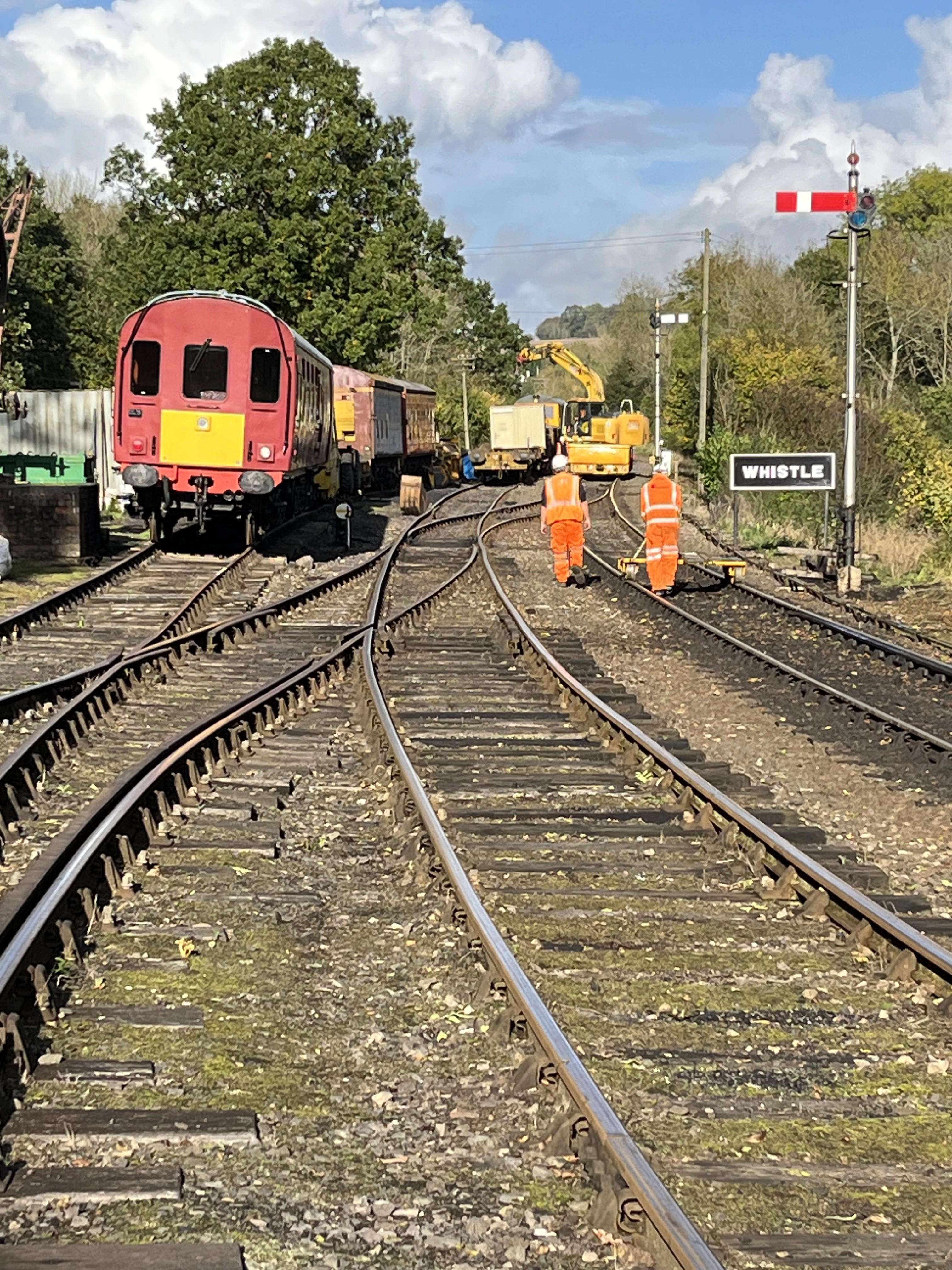 The Down Starter has been replaced by the Up Starter - the old concrete post is on the ground and will be transported to Kidderminster for refurbishment of reusable parts. [Photo: C. K. Hall]
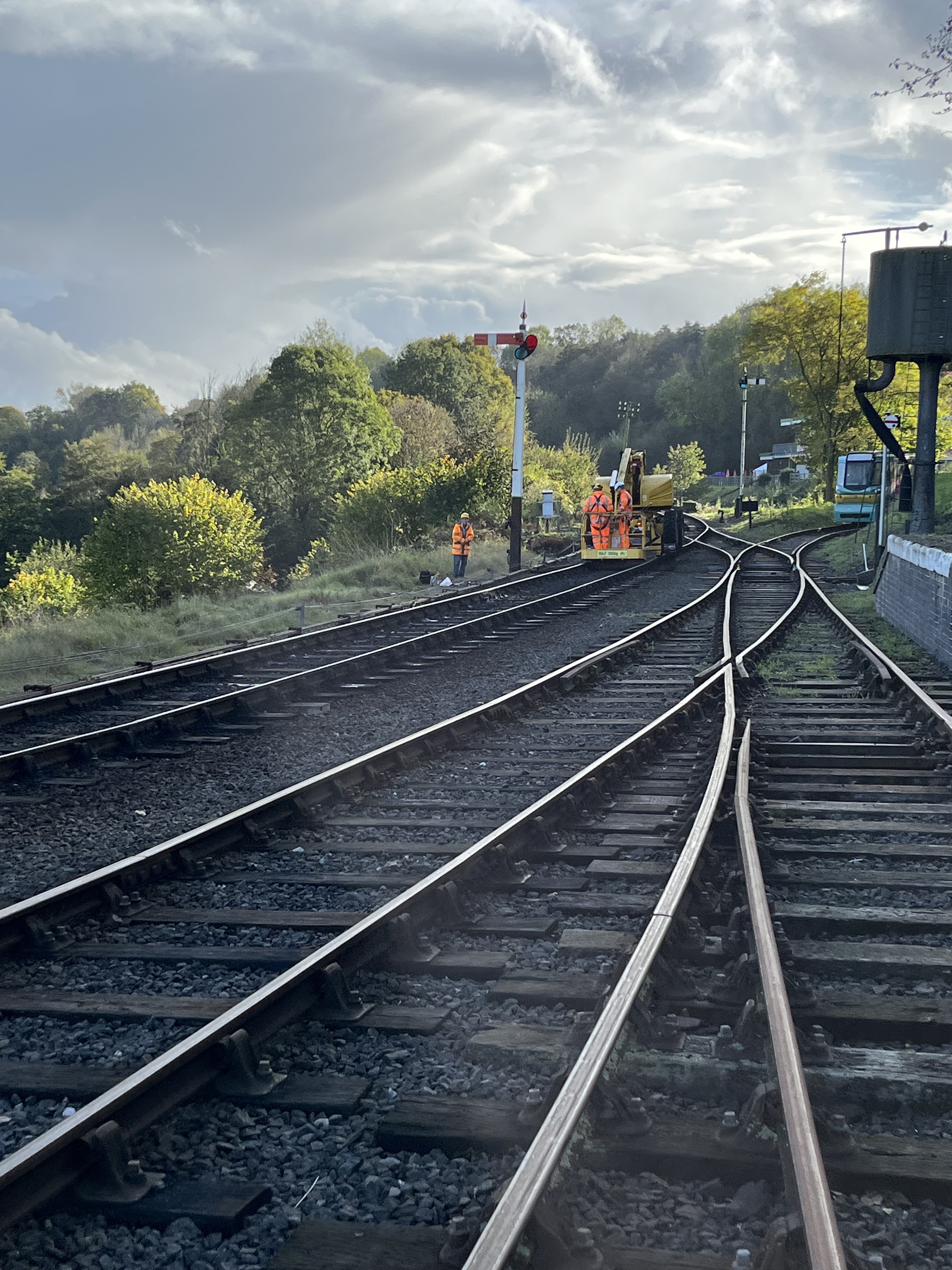 The Up Starter has been under construction for some time in the S&T stores shed and we were pleased to see the GW-style wooden post erected and fitted out. [Photo: C. K. Hall]
Lever 1 at Highley has been reinstated after some work to remove some plates rivetted to the lever tail. These are thought to be related to the lever‘s original purpose to operate the Up Distant (probably a spring assister). The Distant signals would have been fixed in the 1920s as was done on all token worked sections. When the frame was relocked in 1945 to the GW 5-bar design (modified to suit direct lever travel and separation) this lever would have been a spare. The catch rod block was broken during our work so a replacement was obtained with the kind help of the North York Moors and so it is the only one marked �McKenzie & Holland‘. At Foley Park the P-Way have been installing the siding end of the crossover and by 29th October had marked the position of the points toe - this was sufficient for us to work out where the hole for two large concrete blocks needed to be and we asked the P-Way to dig the hole for us. By 19th November some sleepers and the crossing block had appeared and by the next weekend the switches had been laid out. We used wooden mock ups of the concretes (much easier to lift in and out) to get the positioning and levels about right. We manhandled the concretes, end over end and into the hole and aligned them under the rodding.
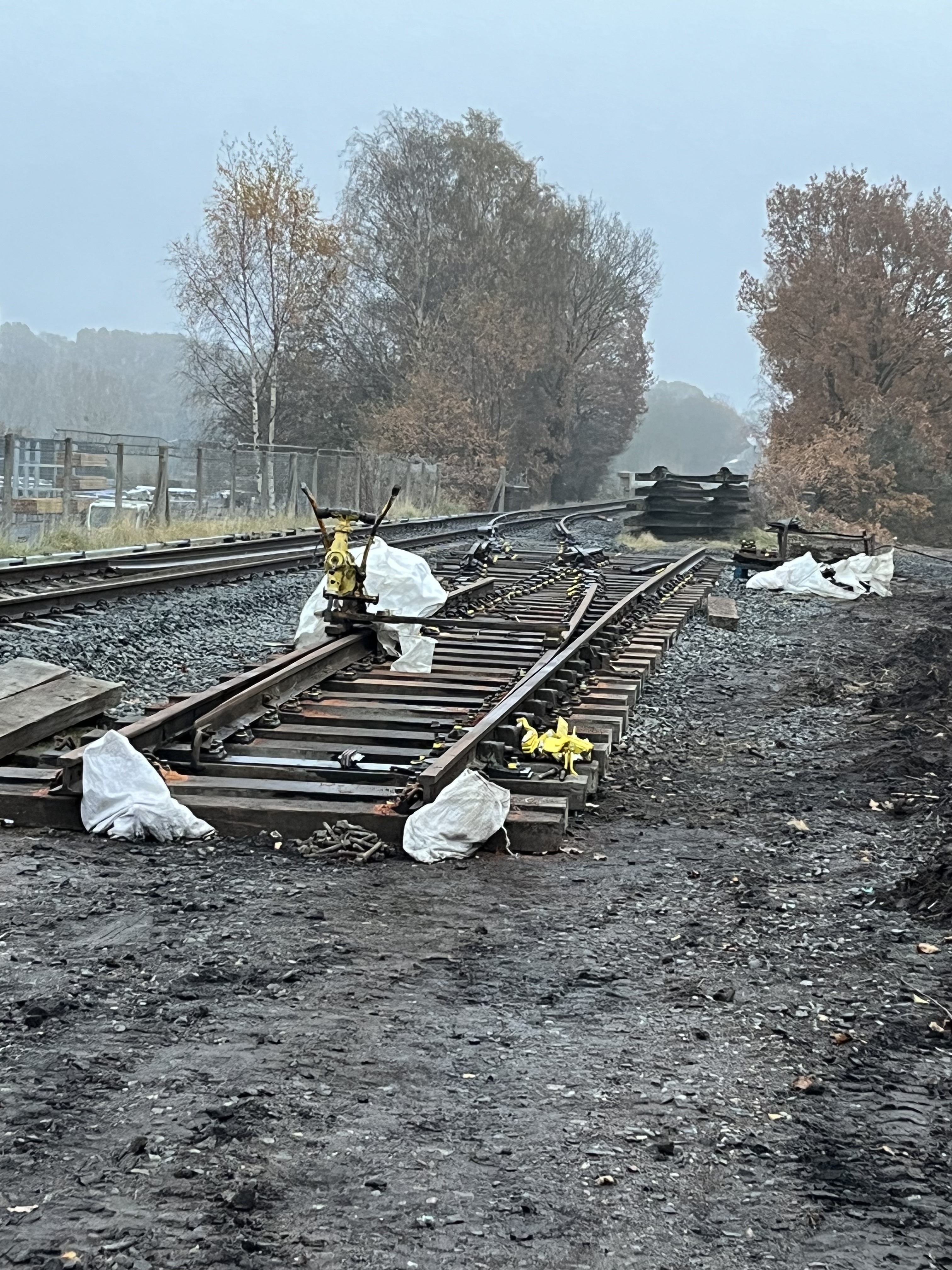 The siding end of the crossover is taking shape on Sunday 26th November. [Photo: C. K. Hall]
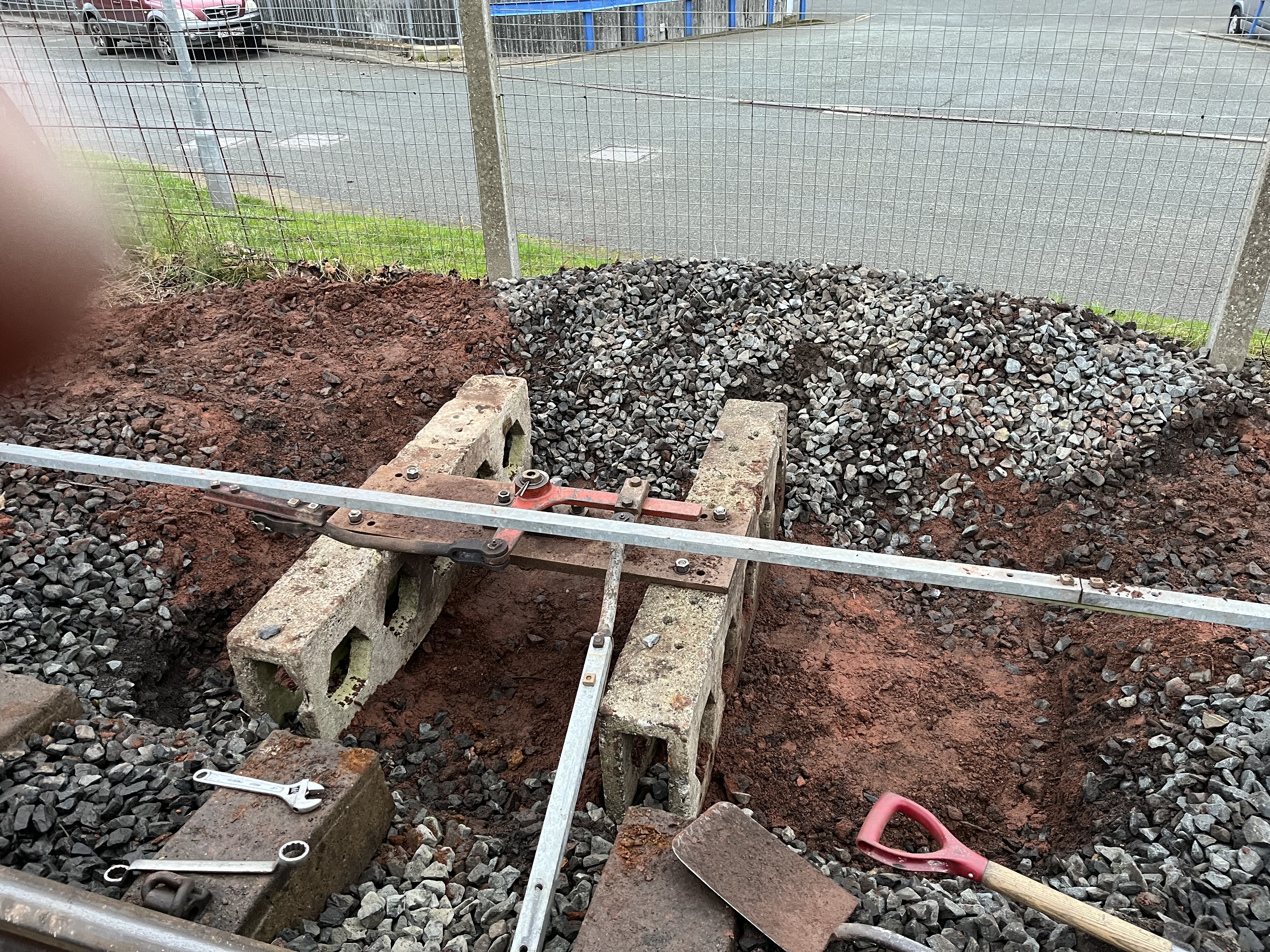 The P-Way were kind enough to dig us the hole for the concrete bases. We have levelled them up and mounted a cast plate and an adjustable crank. A short length of rodding was all we were able to bring. [Photo: C. K. Hall]
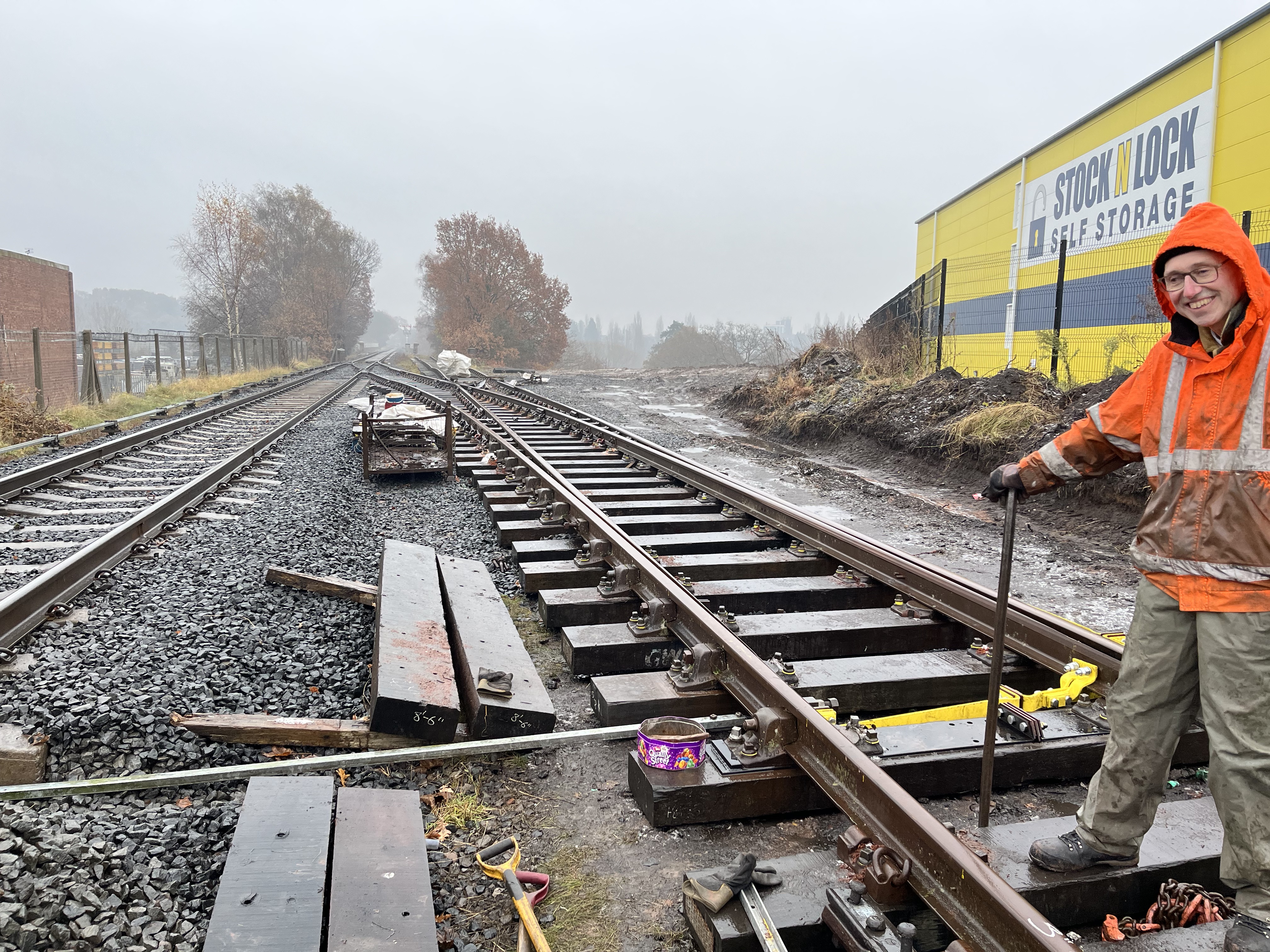 On 3rd December we had to move some sleepers out of the way, dig some ballast, and used the passenger engine to bring a full length of rodding to site. We have been able to connect the drive stretcher to the drive crank, at least to one rail! [Photo: C. K. Hall]
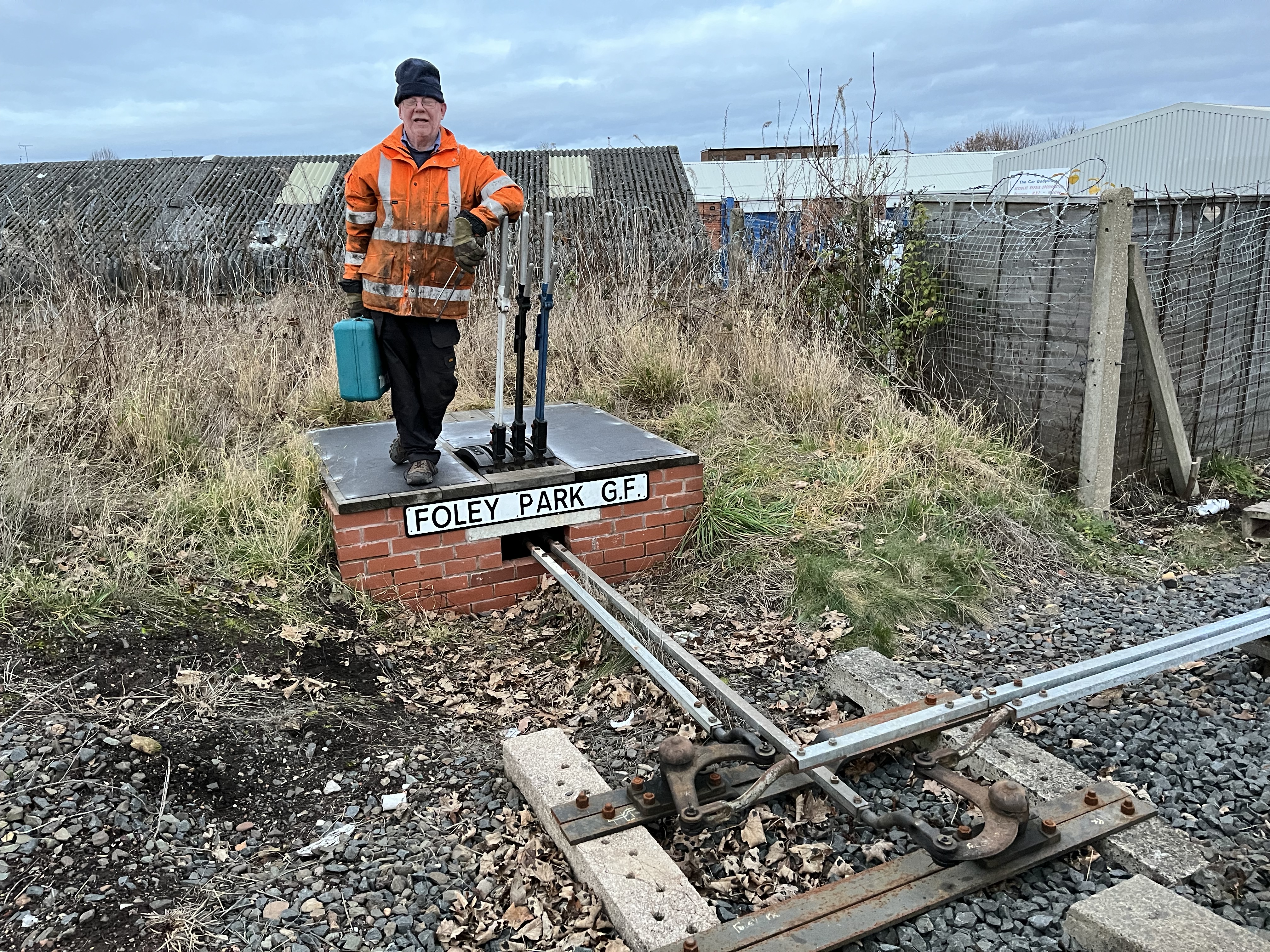 On 17th December we fitted some anti slip material to the boards and fixed the name plate. [Photo: C. K. Hall]
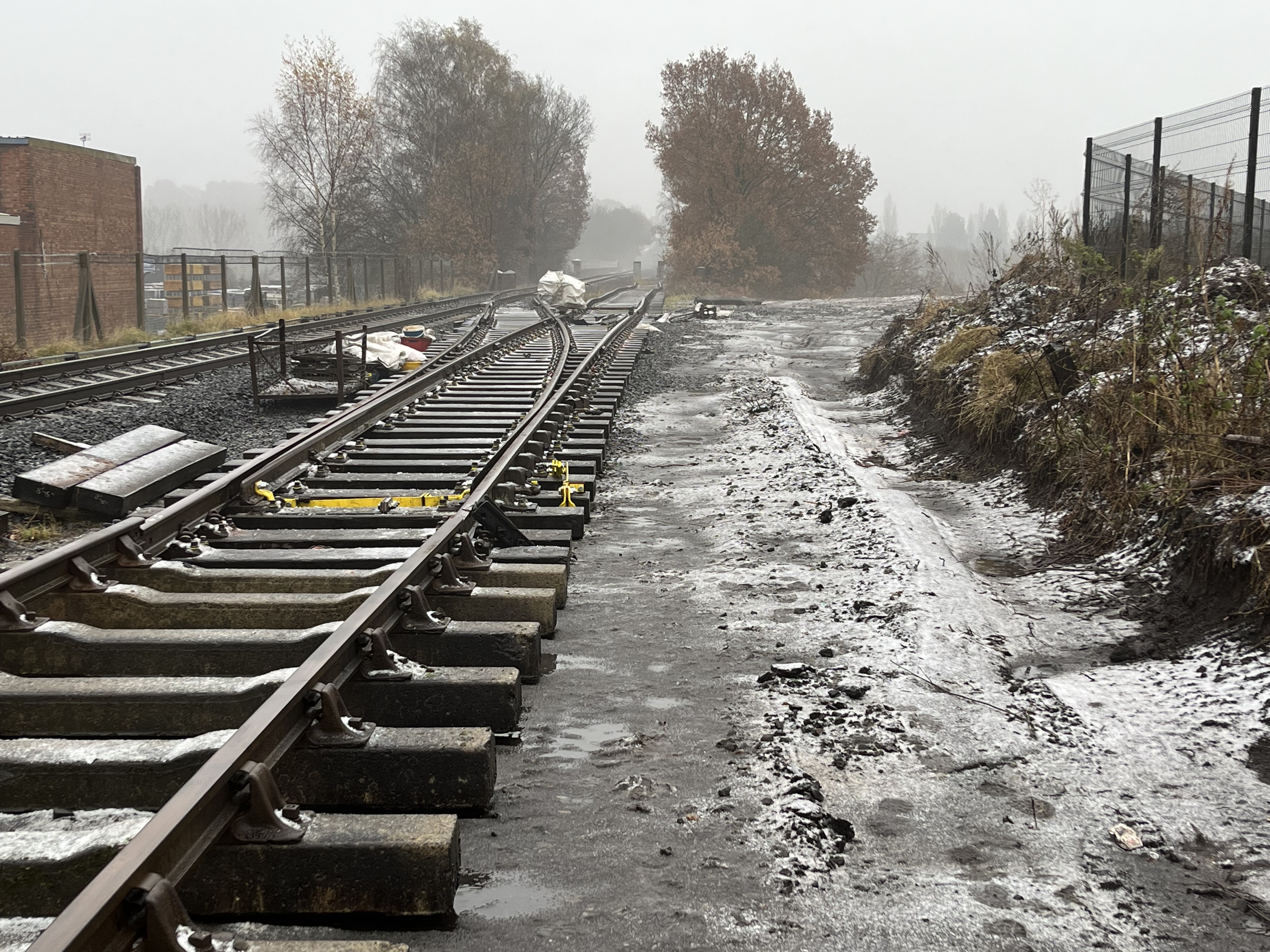 The light was beginning to fail on 17th December so we have not yet been able to mark up the stretcher (the yellow bit) for drilling. [Photo: C. K. Hall]
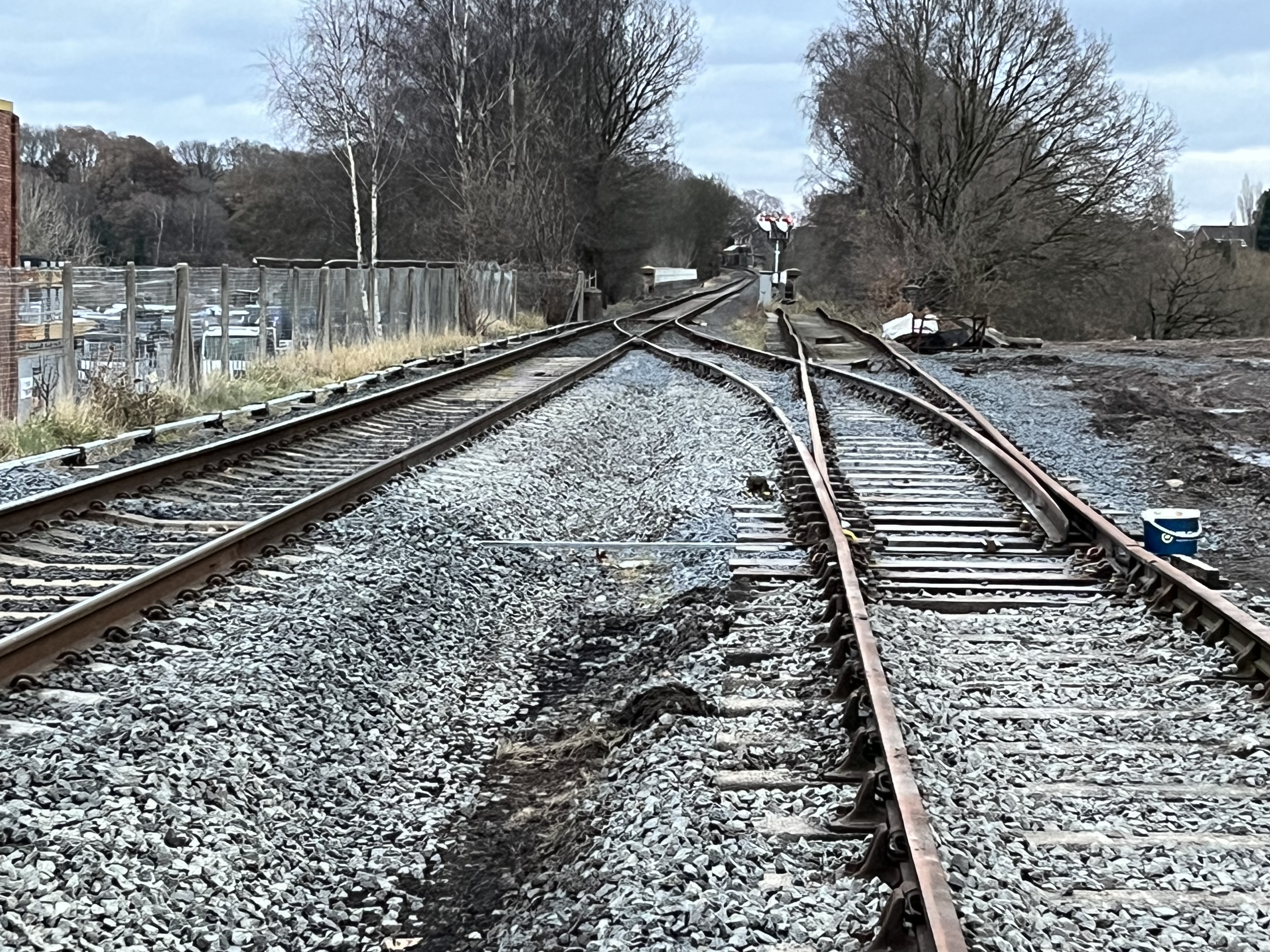 The P-Way have dropped some ballast so we have some more digging to do but that will have to wait until after Christmas. [Photo: C. K. Hall]
On 3 December we measured up the length of the drive rod required as 3• short of a full length (18 feet), collected the chop saw from Bewdley, got some lunch at the Museum and were able to borrow the train engine for the 2:30pm departure to deliver the rodding to site. The plan was to measure up on 17th December (to drill three stretchers) but we were diverted to an intermittent fault at Kidderminster on 42 points detection - this was blowing fuses in the location cupboard. The effect was to hold the Up Loop Inner Home at Danger. The fault was traced to the 4-core cable from the location to the detection box which meant we had to dig out the troughing and replace about 25 yards of cable. We had little time at Foley Park before the light went but laid some anti-slip and mounted the nameplate. There are 600 sticky labels to attach to luggage labels - these are for running the wires in Bridgnorth box - so we had a rather late finish at 7.25pm.
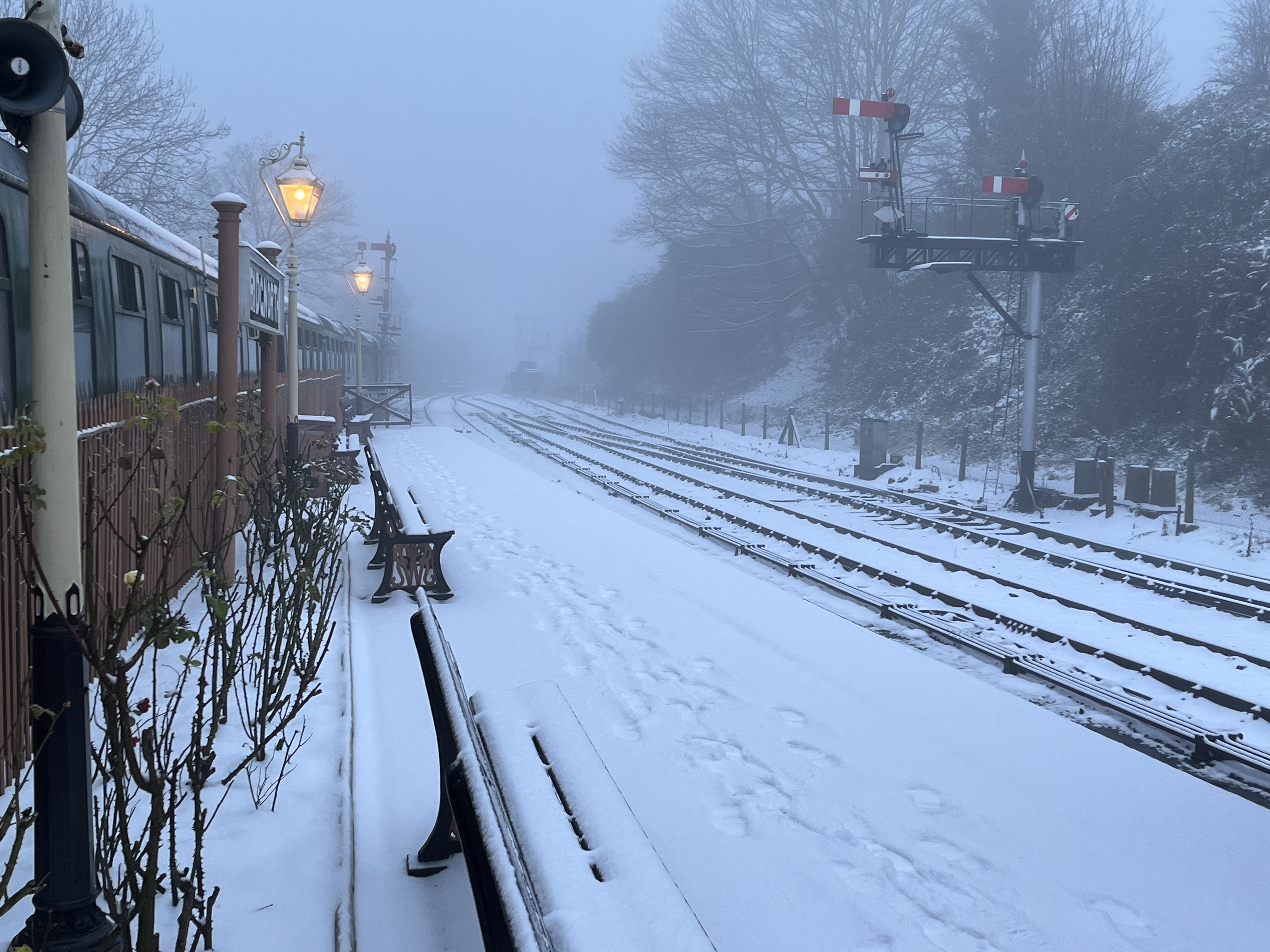 The morning of Sunday 3rd December saw Santa services start at the north end of the line but there was ½• of snow at Bridgnorth at 08:15. [Photo: C. K. Hall]
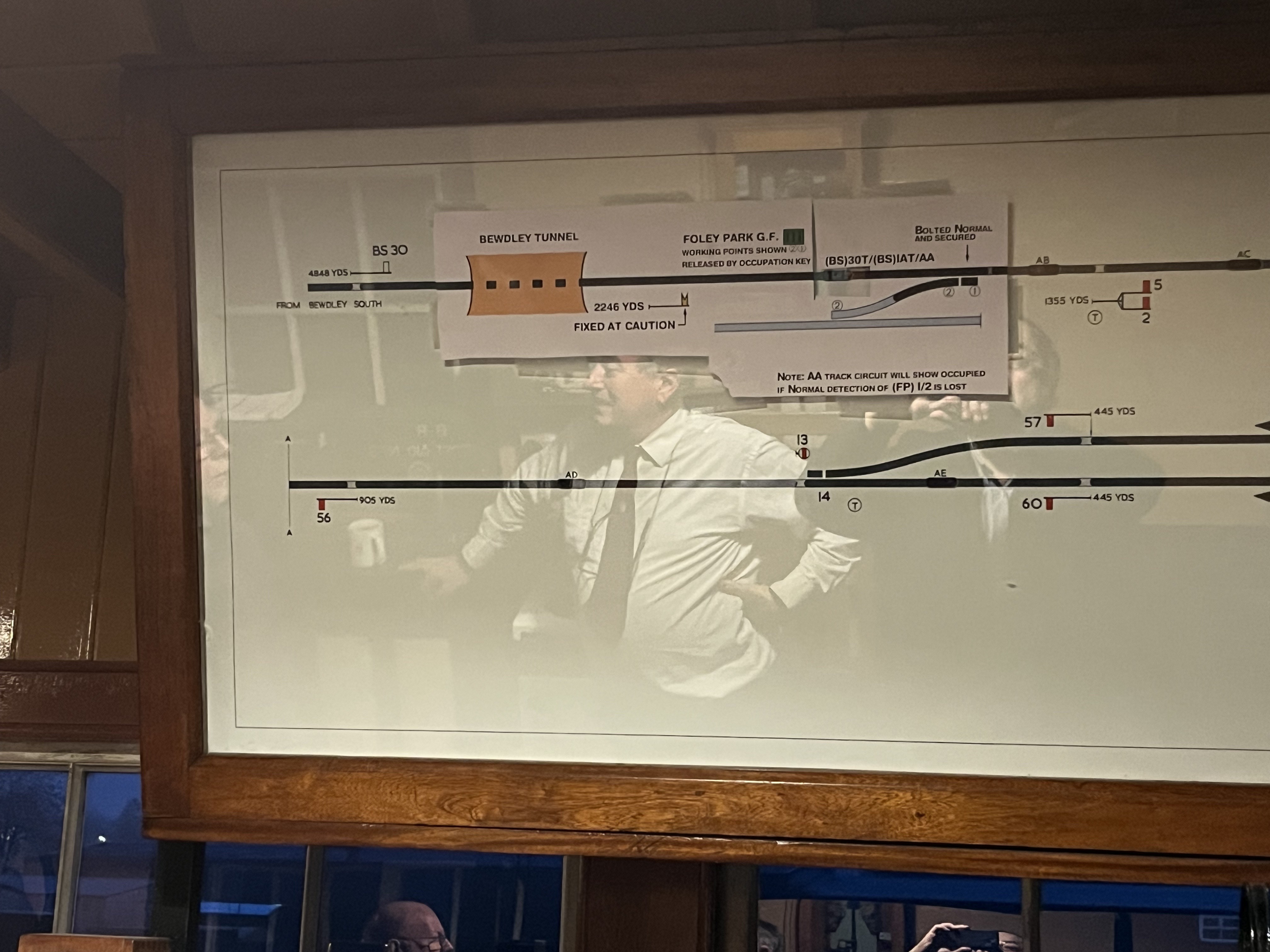 It was therefore quite pleasant to find an indoor job later that day - updating the box diagram at Kidderminster to show the siding end of the crossover, just being installed. [Photo: C. K. Hall]
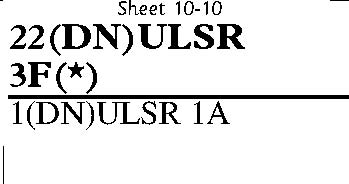 One of the sticky labels: this will be threaded onto one end of the wire that runs from 22 Down Route Lock Stick Relay front contact no. 3 [22(DN)ULSR 3F] to 1 Down ULSR arm contact no. 1. As the wire is terminated, the label is removed and ticked off on the drawing. [Photo: C. K. Hall]
We fitted the last of the three stretchers on 14th January and were able (with no services running) to use the occupation key to unlock the ground frame. We adjusted the points and then left the ground frame disconnected again until it could be commissioned. Our work at Foley Park is therefore substantially complete and we‘ll return there once P-Way work on the siding is concluded.
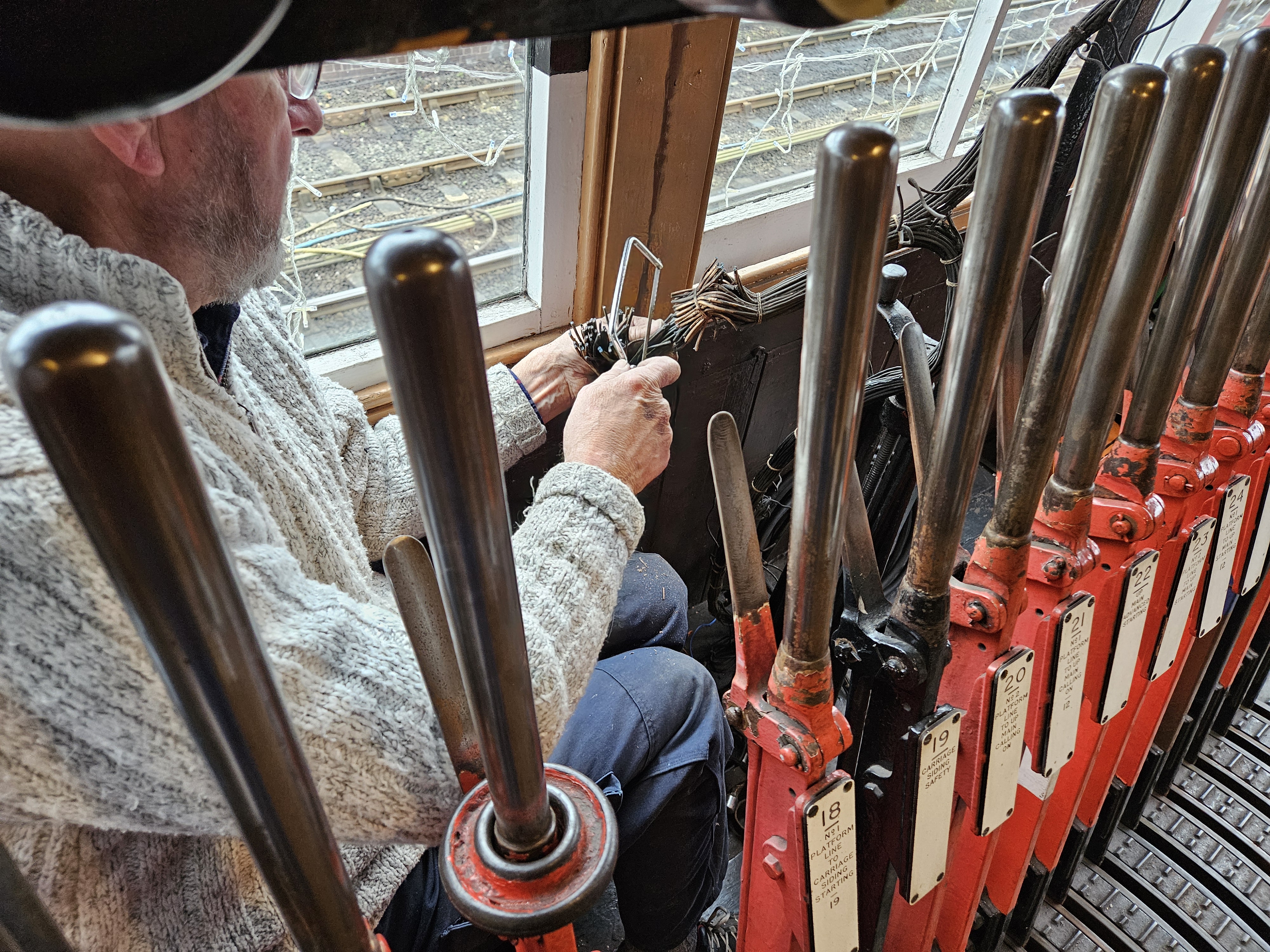 The point of no return. Graham puts a hacksaw through the bundle of wires rising up to the diagram. We are just 25 minutes into the possession on 8 January. [Photo: D. Stowell]
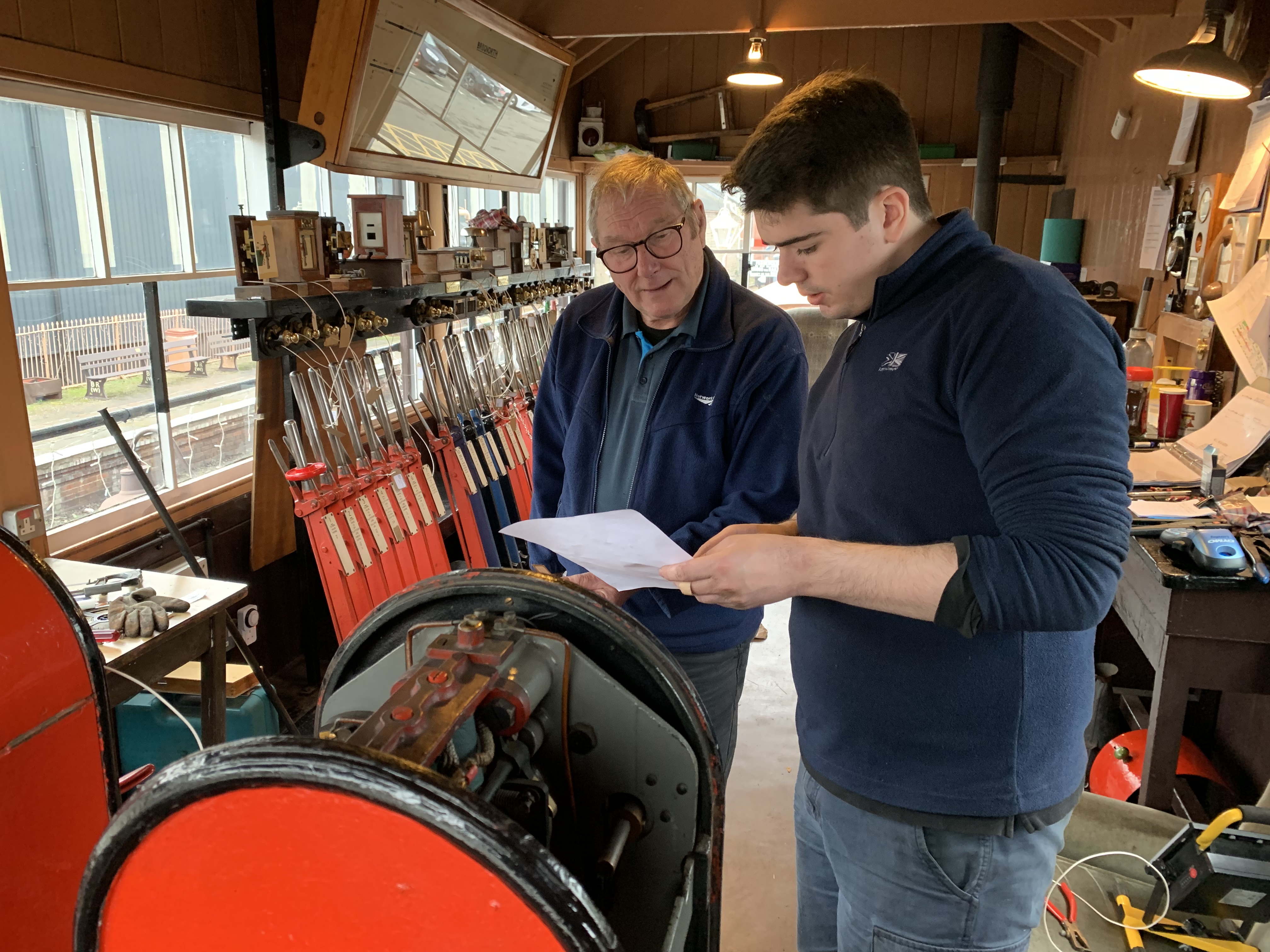 The oldest and youngest members of the Department re-wiring the token machines. [Photo: D. Stowell]
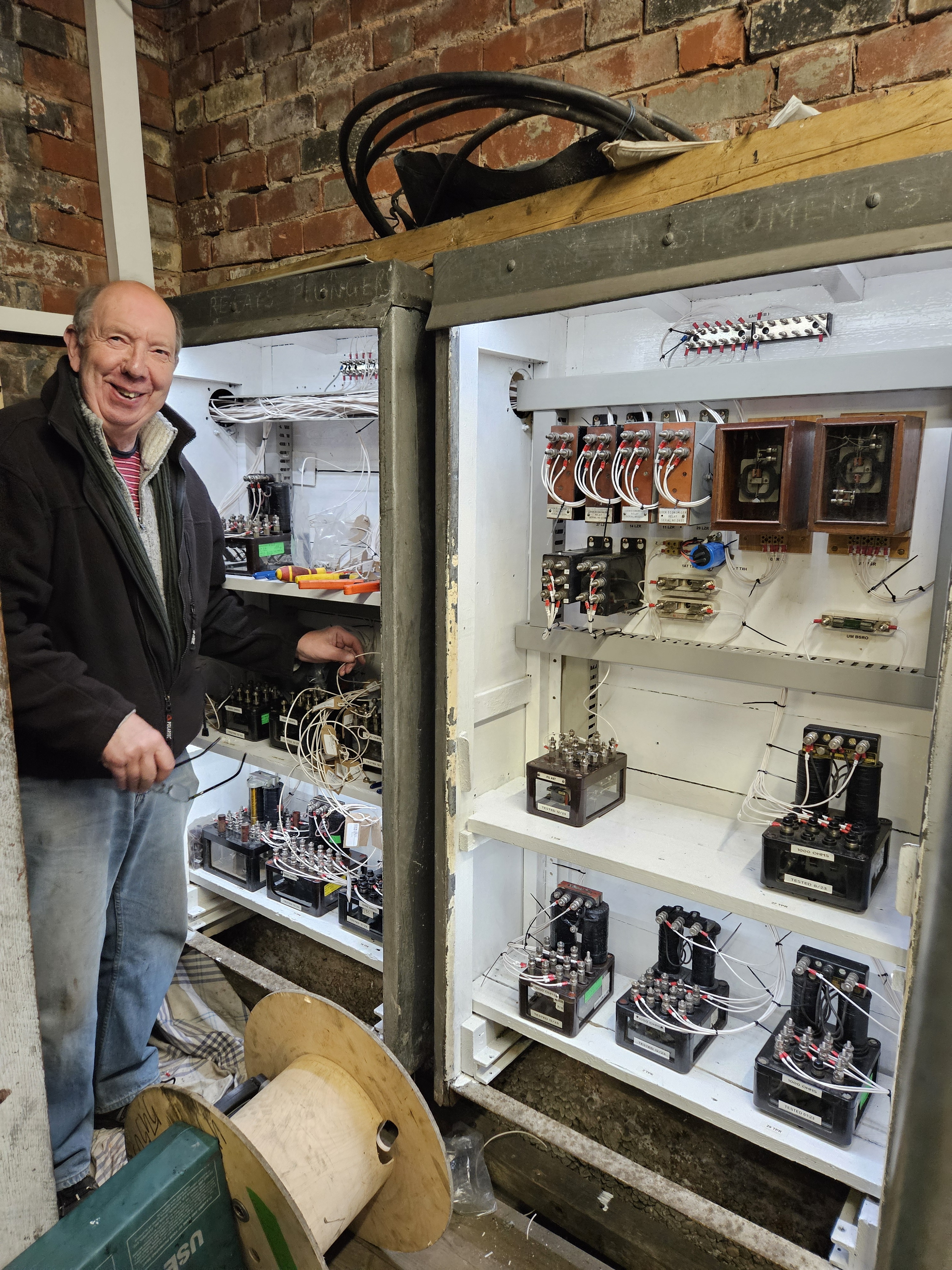 John Taylor wiring some relays. This shot compares nicely with one taken in April 2023 before the work started which shows the original rubber insulated wiring which was laced with string to be self supporting. The new wiring now runs in �beta duct‘. [Photo: D. Stowell]
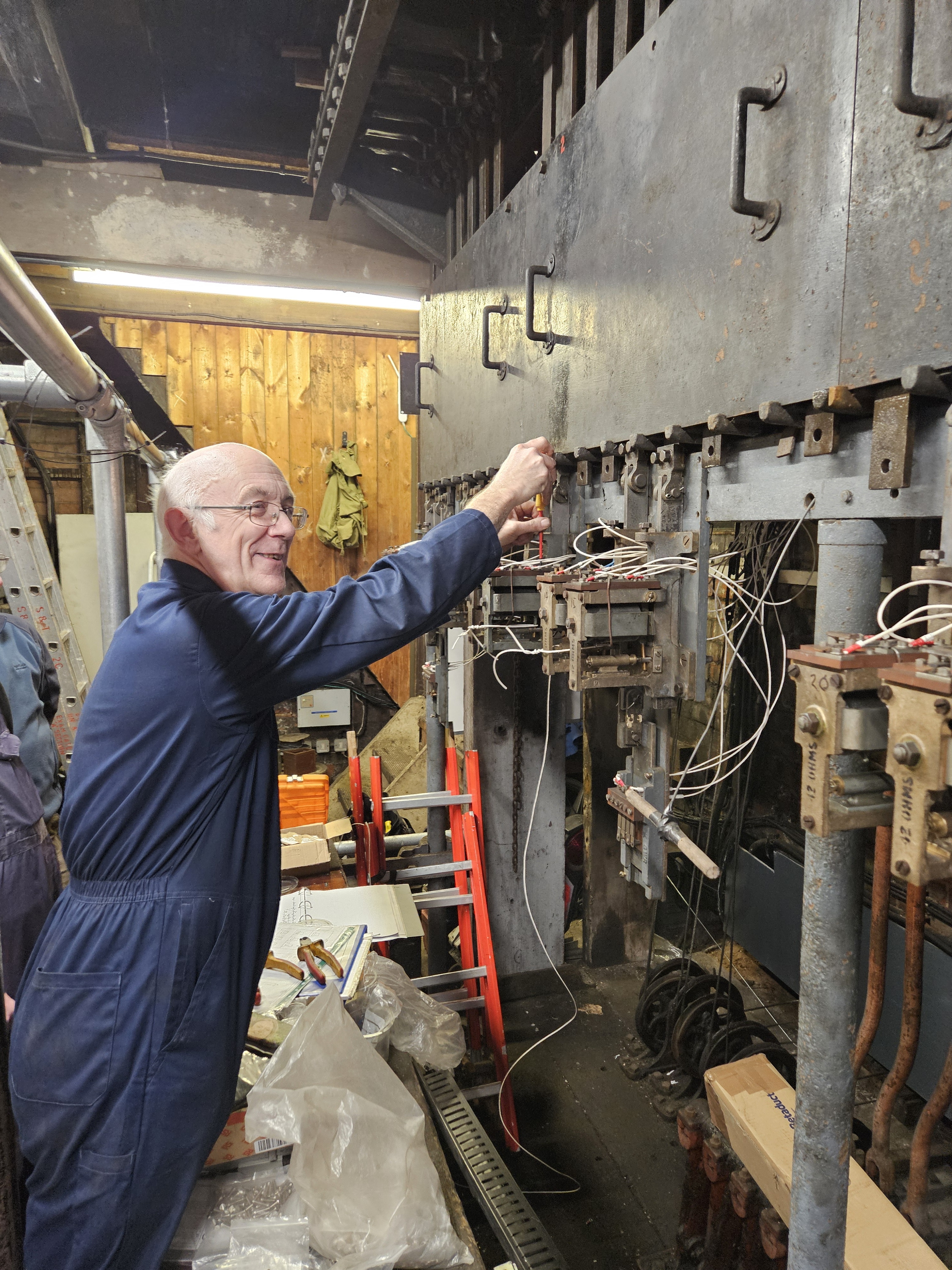 John Smith terminating the final wire on the lever locks. [Photo: D. Stowell]
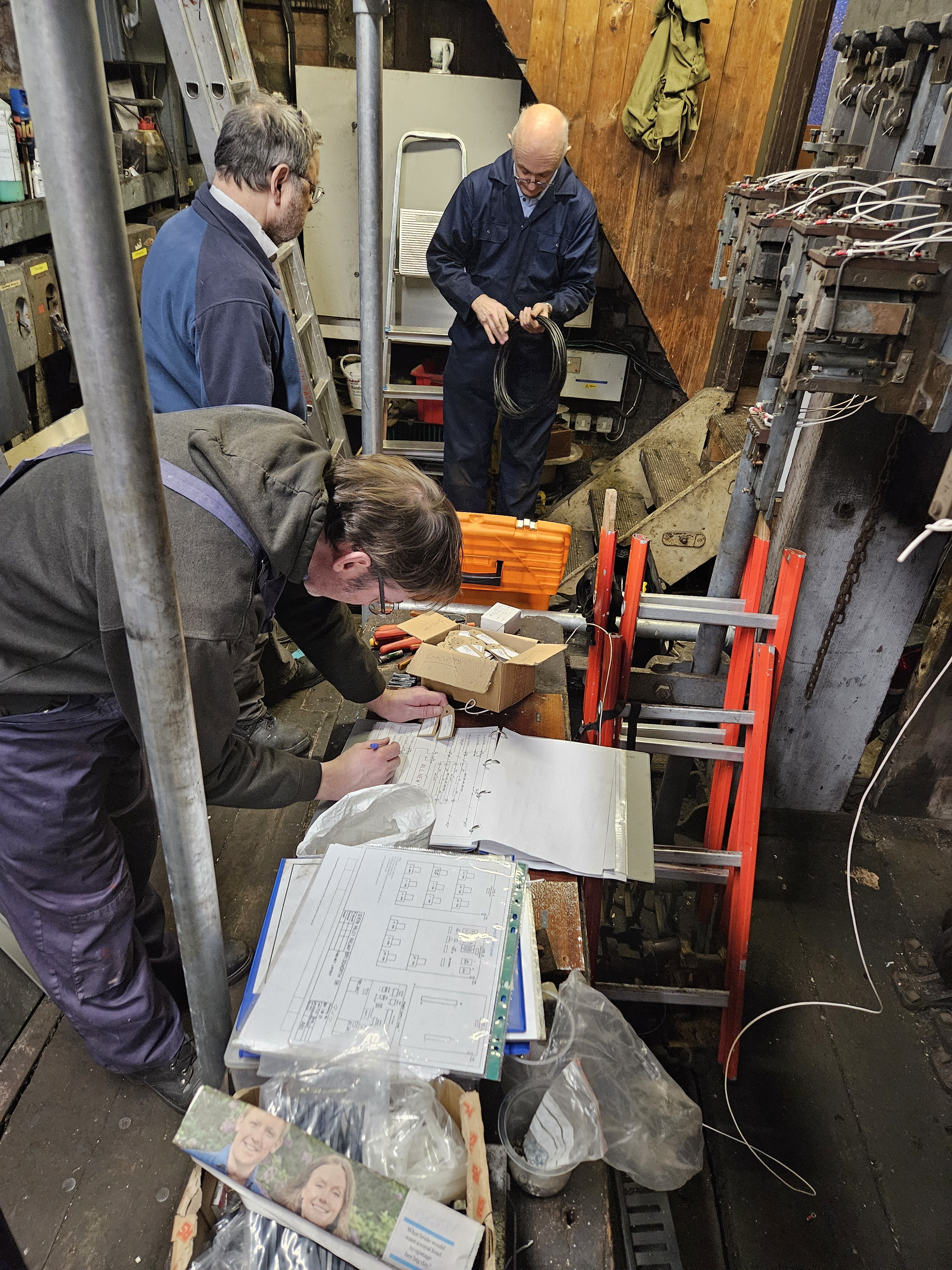 Thomas is marking off the completed wiring on the diagrams as each label is returned. [Photo: D. Stowell]
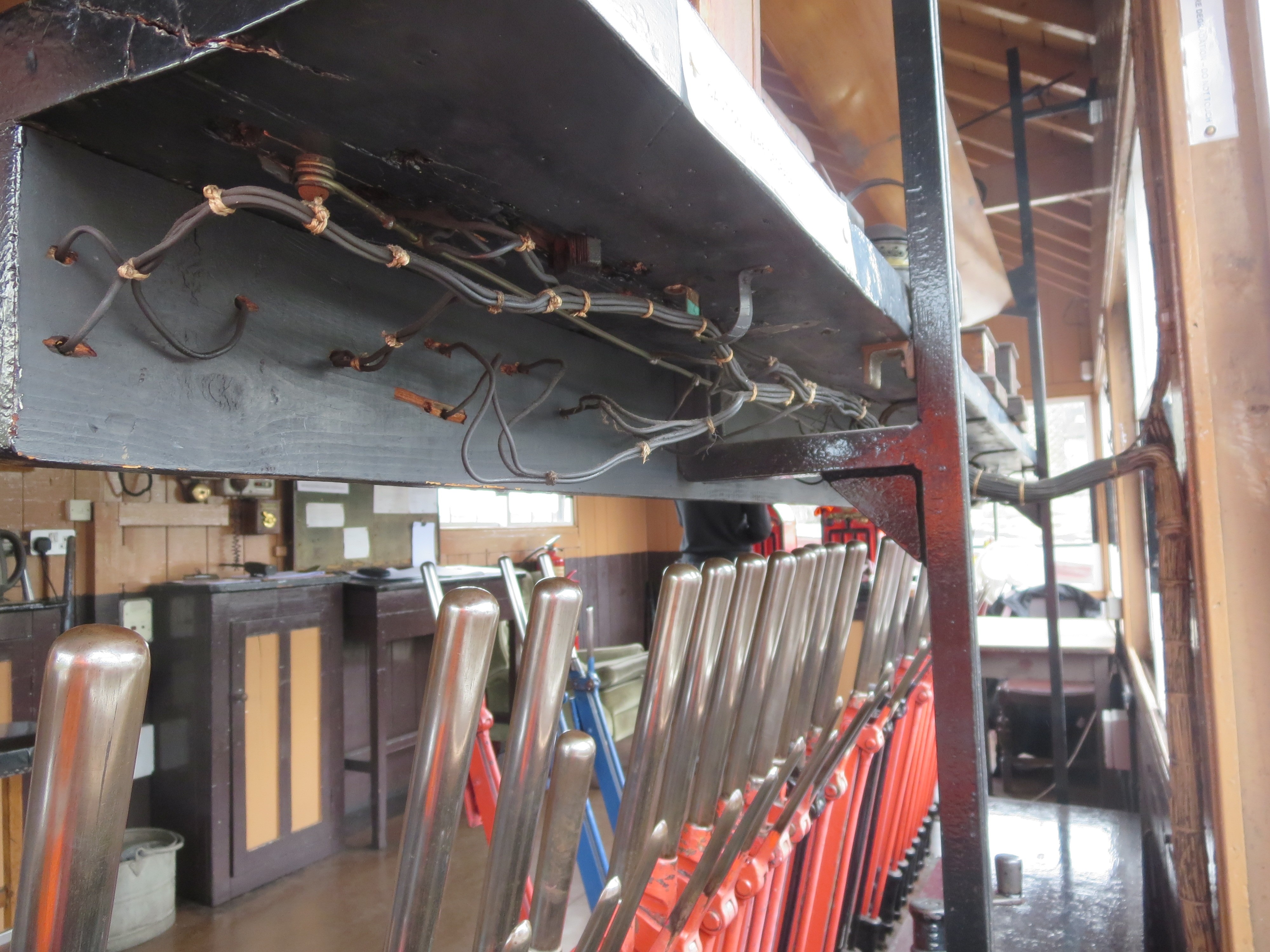 A shot taken in April 2023 showing the poor condition of the block shelf wiring which dates from 1977. It is in direct sunlight and the insulation has degraded. [Photo: J.Smith]
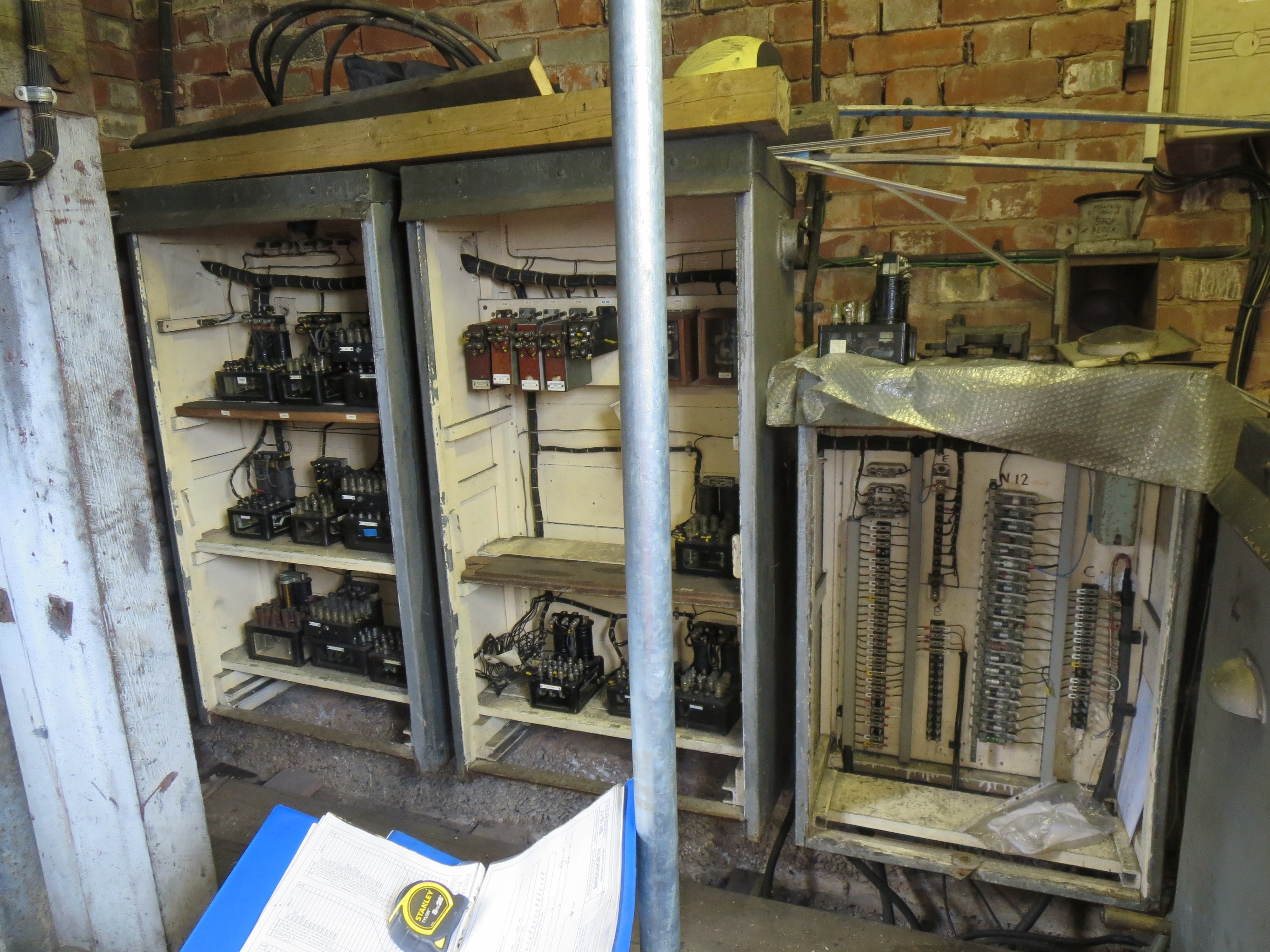 Another shot in April 2023 showing the relay and cable termination cupboards of the 1977 installation downstairs. [Photo: J.Smith]
The work at Bridgnorth to rewire the box had been long in the planning stage, prompted by the degradation of the wiring loom running from the locking room to the block shelf and diagram which was regularly exposed to strong sunlight. Between late June and the day before the possession, a small team, John Smith, John Taylor, Thomas Franklyn and Dave Stowell had spent some 65 man days on preparation work including the installation of trunking, painting, preparatory fitting out relay, terminal and power supply cabinets etc. all without disturbing the existing wiring. The wiring loom from downstairs to the block shelf and diagram would be replaced by wiring inside a �heritage‘ wooden conduit - this could not be fitted until the existing wiring was removed.
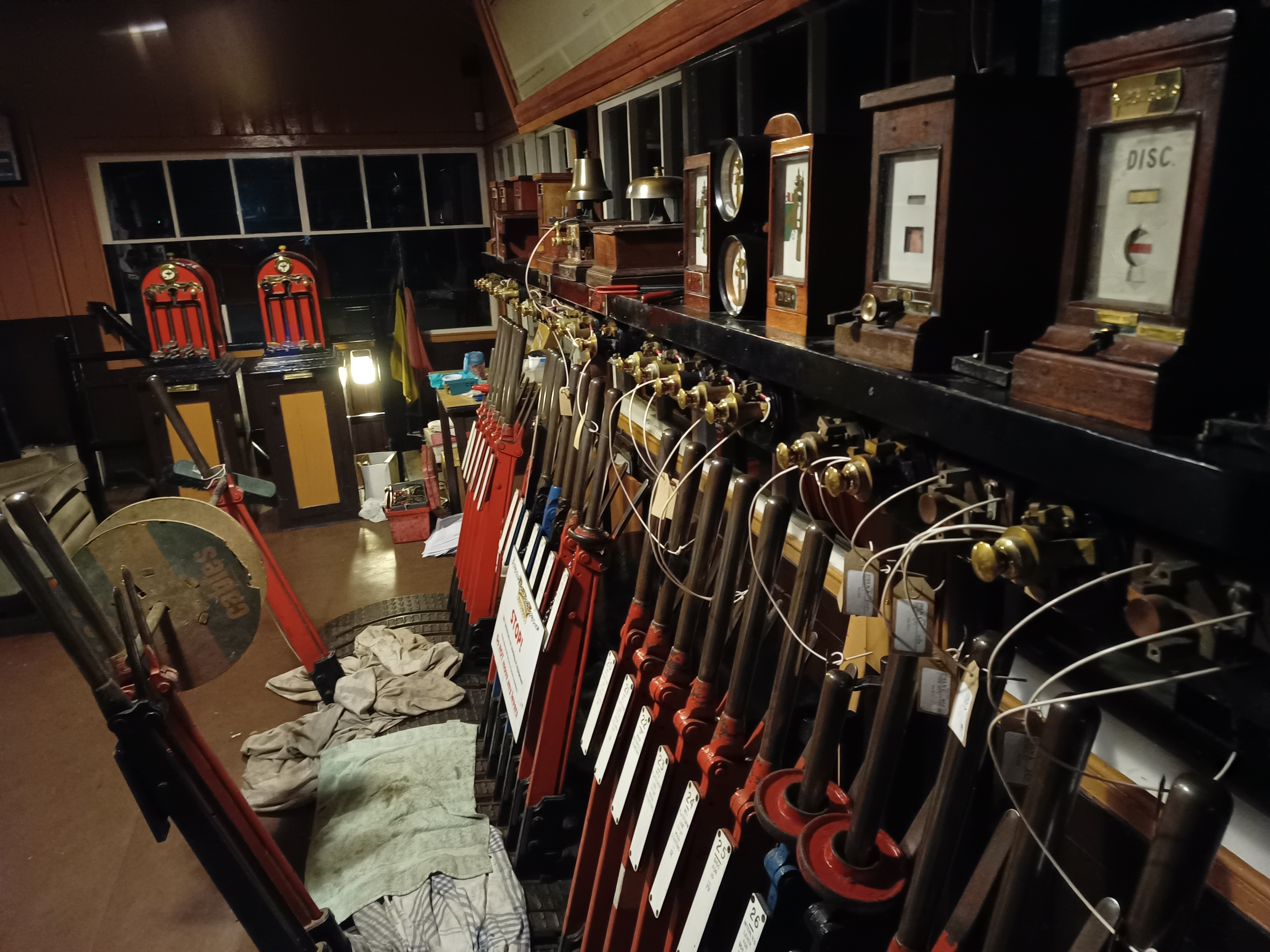 By 16th January most of the 300 wires have been run, a luggage label on each end identifies where they are to be connected (and where they run to). [Photo: D. Stowell]
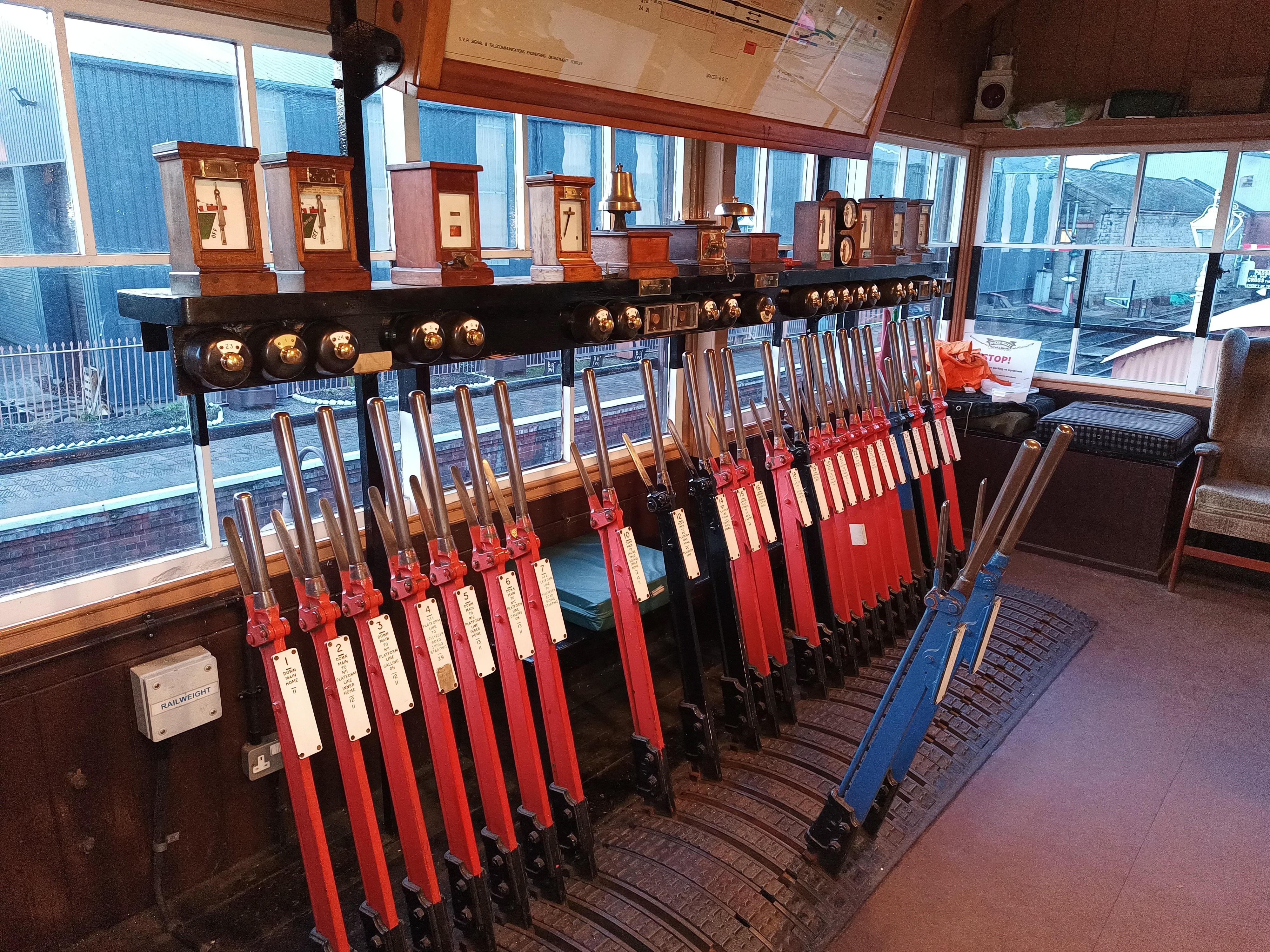 A shot taken on 24 January 2024 - we have completed the rewiring and, as usual, when we have finished a job (apart from the testing and commissioning) it looks as though nothing has changed! [Photo: D. Stowell]
On 8th January a possession of the station area at Bridgnorth (all lines excluding the Yard but including the headshunt) had been arranged from noon. The first job was to install replacement wooden trunking from the locking room to the diagram, which could only be done after the old wiring had been severed - the point of no return! Over the next week or so the new wiring was run in the new trunking provided over the previous six months. Five or six days a week for the permanaent staff and volunteers was scheduled and once the wires had been run, they could be terminated. The first focus was on the token machine wiring and the token circuits were tested on 15th January. The last relay and lever lock were terminated on 22nd January after which comprehensive testing would be required, including belling out each wire to prove installation was as per drawing. Work was on target for completion by 8th February when the possession would be given up so long as all went well.
During the possession we will have put in something in the region of 108 man days. All told the work during the possession has seen 18 people involved in total at some point during the programme. On top of this are the considerable uncounted hours spent off site on activities such as planning, production and checking of drawings and test plans, manufacture of components such as the �heritage‘ wooden trunking for the operating floor, backboards etc. for the relay cabinets, and cleaning, refurbishment and testing of items such as relays etc.
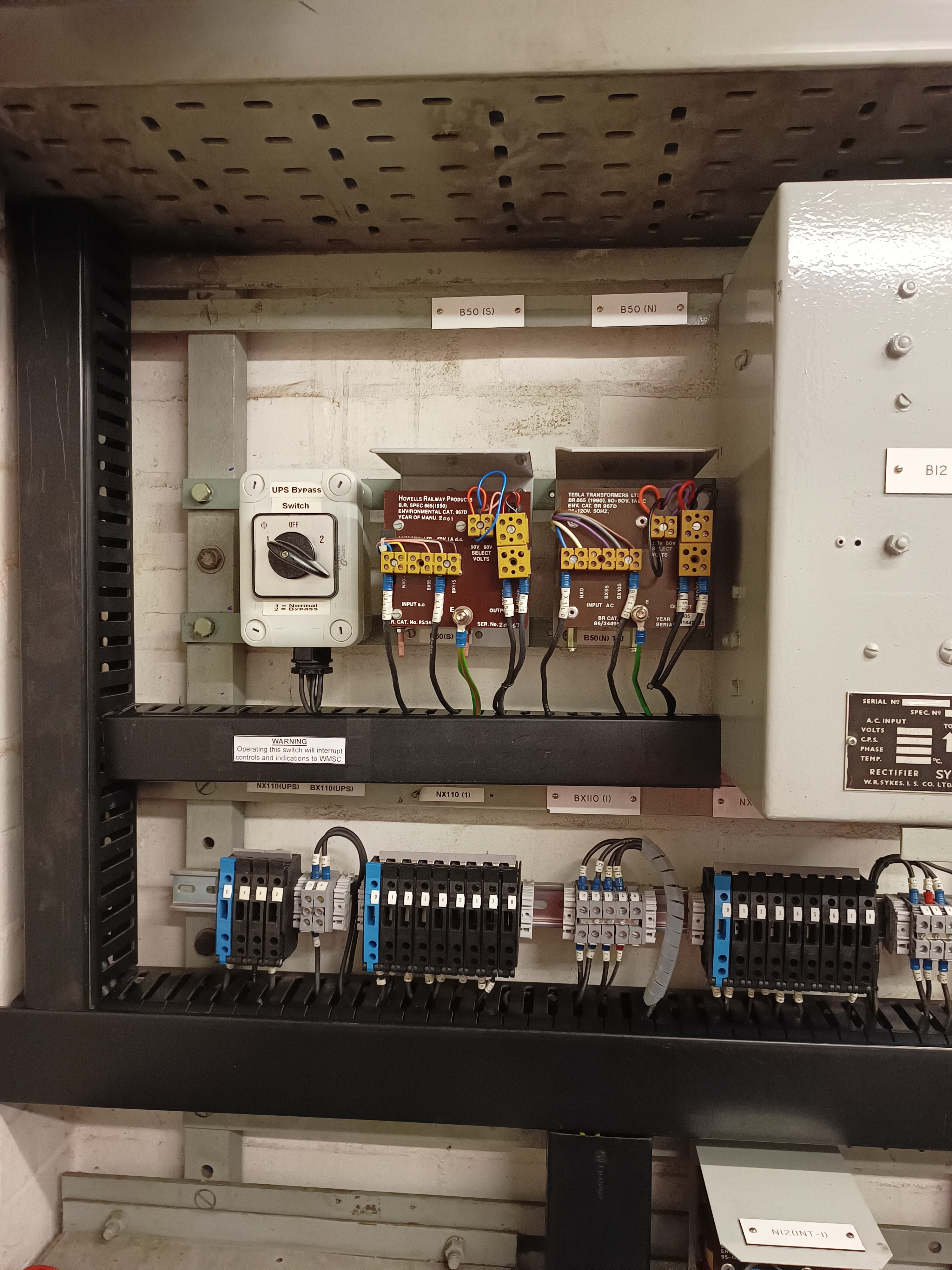 The last article mentioned the new UPS at Kidderminster - this photo shows the new installation which will maintain power supplies for the indications sent to WMSC even if mains power to the box fails [Photo: J.Smith]
A reminder that this article, as well as other information on Signal Engineering, can be viewed in full colour here on the unofficial Signal Engineering web site.