 SVR S&T Dept.

SIGNALLING NOTES - Chris. Hall
Now that the running season has started, we have turned our attention from the major jobs (which can only be done during the closed season) to preparatory work and smaller jobs. With the railway not running on Monday to Wednesday we do have some scope for work that requires a line blockage. During the last week in April we used the road railer to strip down and remove Arley‘s Up Distant Signal, putting in place a temporary reflectorised fixed distant board. The box diagram was amended to show the replacement signal and that lever 25 would be �worked to maintain locking‘ at somewhat less effort than before.
We manufactured a new spindle (see below) for the Arley Up Distant spectacle casting as the old one was rather worn. We also refurbished some other parts, bushing worn holes in the balance lever and reaming out a very worn hole in the down rod.
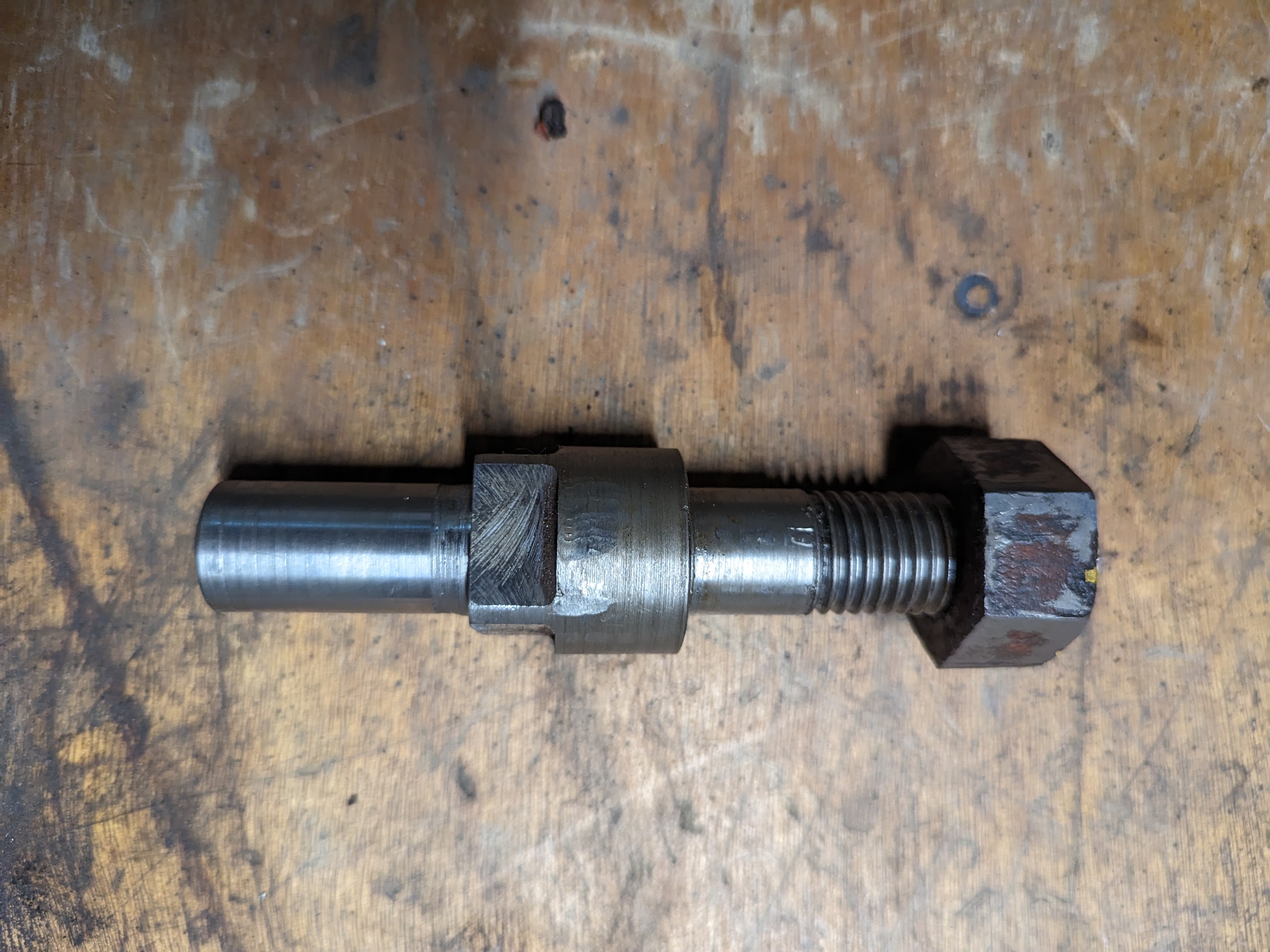 The new spindle which took Tony and myself a whole day‘s work in the machine shop. [Photo: Tony Neath]
The FPL drive rod on the yard points at Arley was worn so we replaced it with a temporary fitting so that we could make a new drive piece for it. Arley is not open on many Sundays now but the Forties weekend provided an opportunity to take a possession between trains to fit the refurbished rod.
We encountered an unusual problem when the signalman was unable to disengage the bolt on 6B points at Bewdley North, requiring a walk out to the points to manually bar the FPL plunger clear. It was a hot day with the trees by the Up Inner Homes casting a shadow over half of the rodding run. This was sufficient to move the plunger by about 1½• so that it remained about ½• engaged. Later in the day when the sun had moved round it worked normally. A small adjustment was sufficient to overcome this but it was something I had not seen before.
Replacing the worn crank on the lead off driving 13 FPL at Bewdley South was a job that had looked daunting but the crank base itself proved to have had very little wear and we were able to replace the crank with a refurbished one without having to dismantle the whole lead off.
Our signalling cables have now been in the ground since the 1970s or 1980s and some are showing signs of degradation. We have replaced a few lengths where cables have been dug up for other work and especially after the floods of 2007 but the 110V power cable between the Down Distant (location 43) and the Home signal berth track circuit (location 42) at Bewdley South had failed and been bypassed using spare cores in the telecomms cable. We had ordered a drum of 2-core power cable of about the right length, some 950 yards.
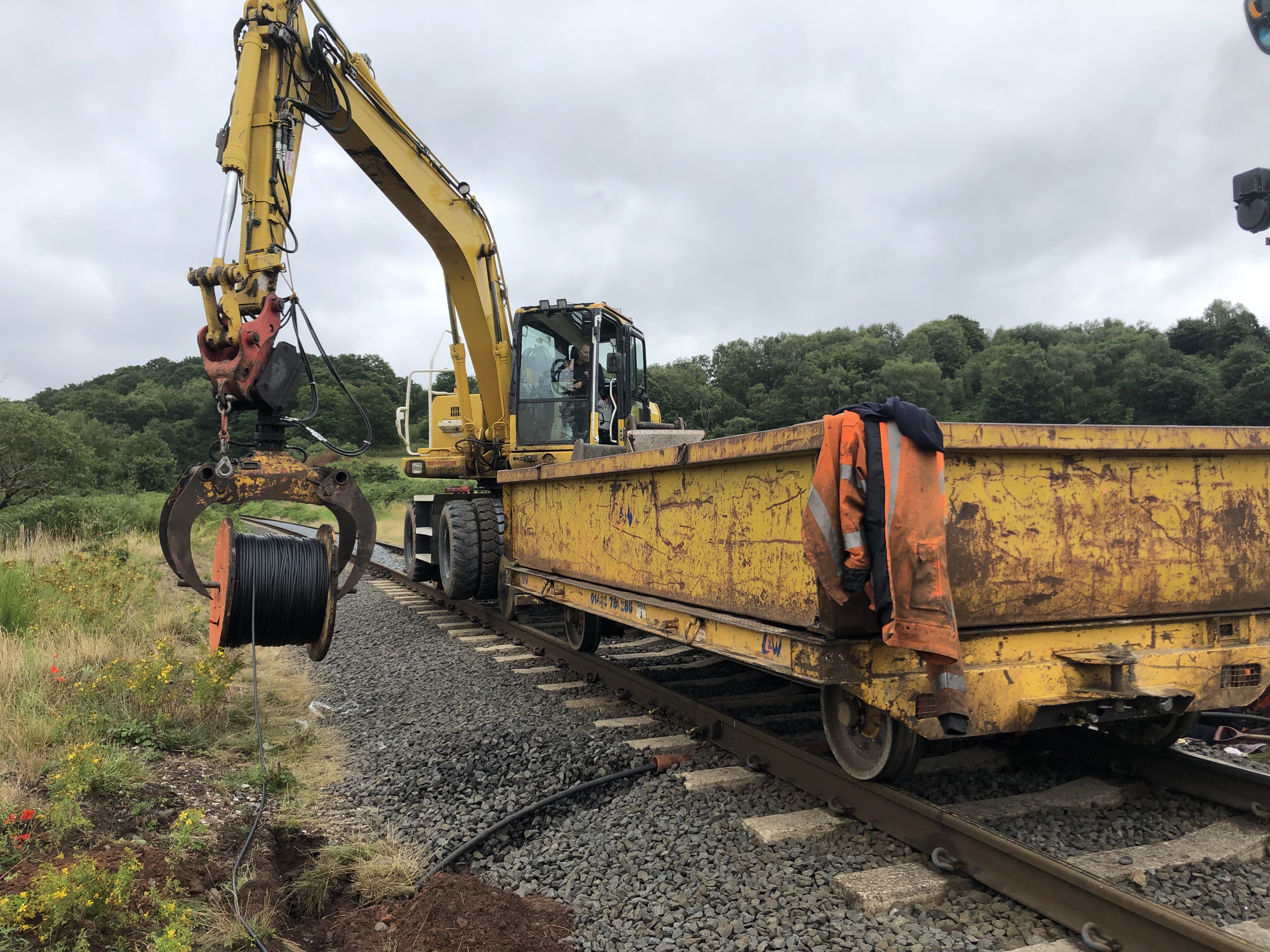 By 10:45 a.m. we have unloaded the trenching machine which has set off towards the Home signal and we will follow it as we pay out the cable and drop it into the trench. Meanwhile the cable is being stripped and terminated in the location cupboard. [Photo: B.Graystone]
A trench would be needed from the Up Distant to just short of the Down Home which is rather a long way for manual digging. On Monday 24th July we had arranged for the hire of a trenching machine, the assistance of the P-Way and use of the road railer. It turned out to be quite a fine day with only a little light drizzle first thing. The road railer‘s trailer had already been loaded with the cable drum and moved from Kidderminster to Bewdley. The trenching machine was lifted into the trailer and the road railer set off for the Distant while we were transported to site by van. There were over ten of us so we would be able to dig a trench over the bridge at Devil‘s Spittleful (which had to be done manually) and at each end (where the cable crossed under the line and into the cupboard).
Walking backwards and guiding the trenching machine (with a banksman to ensure the machine (and operator) do not fall down the embankment) leaves a trench about 2• wide and 6• deep into which the cable can be guided. Once complete, the road railer was fitted with a bucket in place of the grab and the earth smoothed into the trench. The trenching machine had covered about two thirds of the distance, with the road railer following closely behind, when we decided to break for lunch. By then we had terminated the new cable at the Down Distant. Resuming after lunch we managed to complete the trench, terminate the other end of the cable and test and commission it before the end of the day. Not bad for a job we thought would take three days!
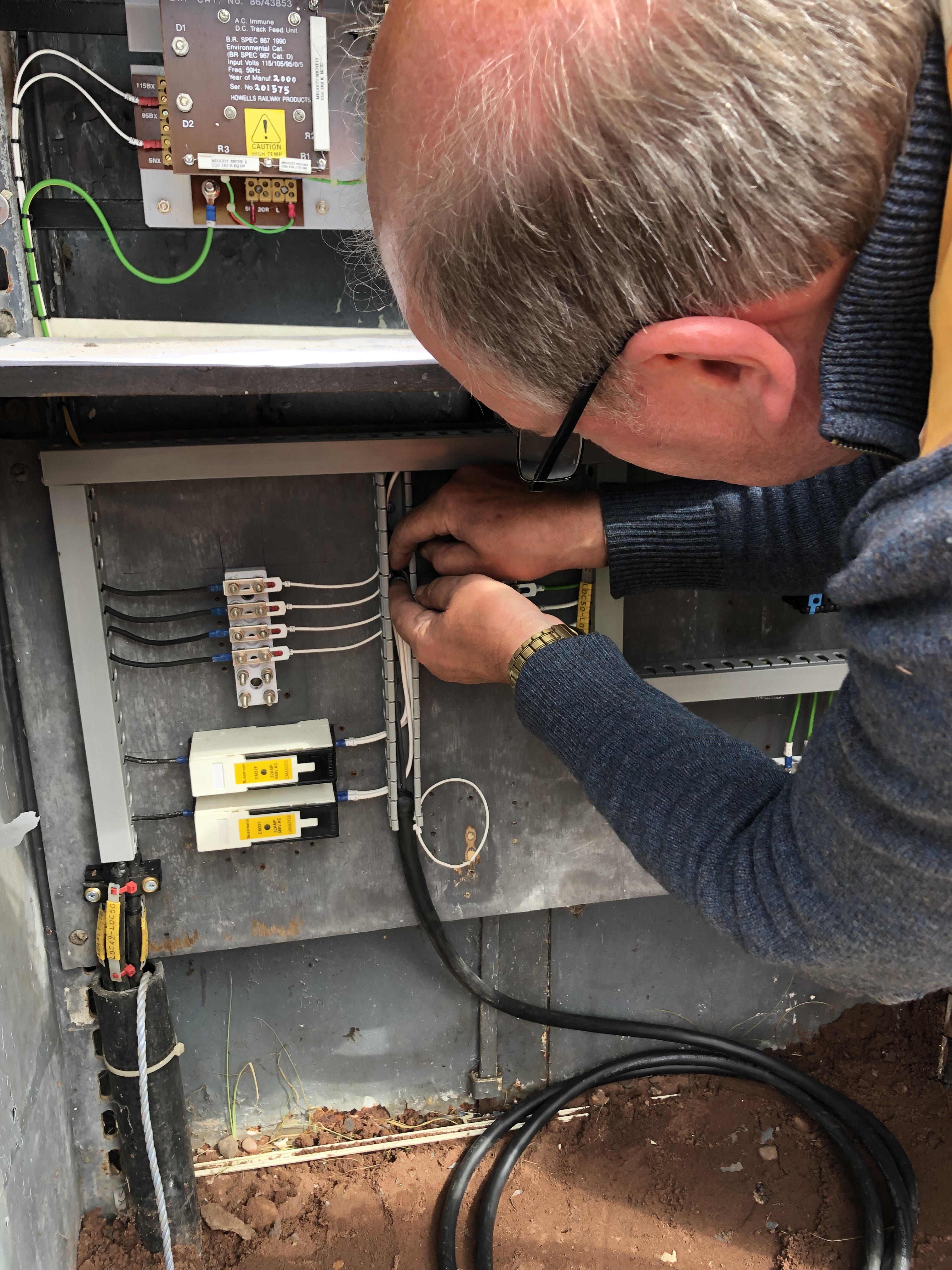 John Taylor is terminating the new cable at the berth track circuit location as the job draws to a close.
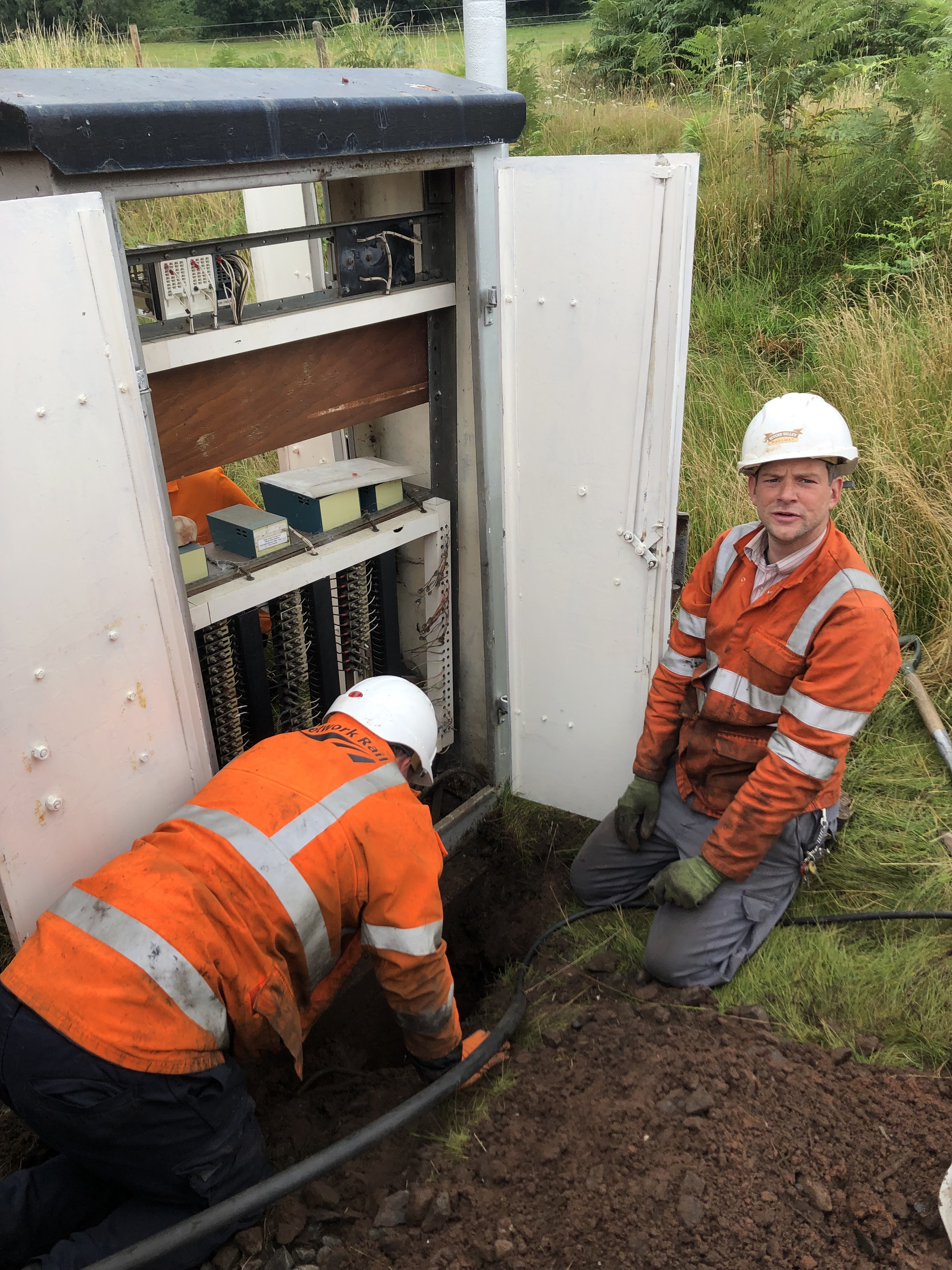 Struggling to thread the new cable into place at the Down Distant while we are preparing to start trenching. [Photos: B.Graystone]
Andy McBeth has been cataloguing and testing shelf relays so that we know what types of relays we have across the railway - plug-in relays (used from Bewdley South to Kidderminster) have already been given this treatment.
Looking forward to the Winter we are surveying Bridgnorth box to see where new cable trunking can be fixed, without disturbing existing wiring, so that new wiring can be run and labelled. This will then allow the box to be rewired during the closed season and the existing wiring, which has been in place for some time, removed. Another Winter job is the forthcoming replacement by the P-Way of the motor points at Kidderminster by the Carriage Shed, which have a 10 mph speed restriction. We have refurbished a replacement point machine which will be quite a large job for us to fit once the new points are in position
A reminder that this article, as well as other information on Signal Engineering, can be viewed in full colour here on the unofficial Signal Engineering web site.